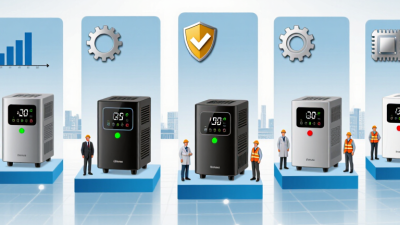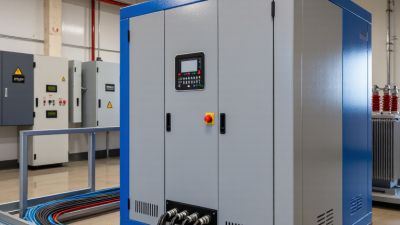


How to Choose an Industrial Voltage Stabilizer in 2026?
Picking out an Industrial Voltage Stabilizer in 2026 isn’t just about comparing prices or going with the most advertised accuracy. Honestly, it’s a bit more involved. Think about a factory—when motors start up, you might see voltage dips. Nearby welding equipment can cause sudden spikes, and sometimes, there are uneven phases across the production line. All of that can damage sensitive drives, mess up automation, and quietly wear out your equipment faster than you’d like. So, the key to choosing the right stabilizer is to start with real, measured data, not just assumptions or estimates.
First off, spend some time recording the incoming voltage over a few days of normal operation. Keep track of the lowest and highest readings, any load changes, and how often power outages happen. Don't forget to calculate the actual load in kVA, including the starting currents for motors and compressors. If you pick a stabilizer that's only designed for average loads, it might completely fall short during peak demand times. Sadly, that’s a pretty common mistake—and it can get pretty pricey, too.
When evaluating options, also look at how quickly the stabilizer reacts, how precise the output remains, and whether it can keep phases balanced. Make sure it has good overload protection, a reliable bypass function, proper cooling, and easy access for maintenance. If you’re installing equipment with variable-frequency drives or rectifiers, harmonic distortion becomes a big deal—don’t overlook that.
Above all, a good industrial voltage stabilizer should really match your site’s needs, not just what’s listed in a catalog. Check if the unit is suitable for indoor environments with dust, humidity, and temperature variations. Also, review test reports, warranty info, service response times, and how easy it is to get replacement parts from the manufacturer. If possible, get an independent inspection before you commit—that can boost your confidence. Still, no matter what, a qualified electrical engineer’s assessment is priceless. Relying solely on a spreadsheet or incomplete measurements can be risky.
Ultimately, the best choice balances solid technical performance, lifecycle costs, and operational risks. Leave some room for future growth, but don’t pay for capacity you’ll never need. While smarter monitoring tools are helpful in 2026, some good old-fashioned field checks and verification are still important. Trust me, it’s all about finding that sweet spot that keeps things running smoothly without breaking the bank.
Read more »