Leave Your Message
0%

Ever heard of a Voltage Stabilizer? Basically, it’s a device that keeps the electrical output steady even when the incoming supply keeps changing. So when the voltage spikes too high, drops too low, or suddenly fluctuates, it helps protect whatever’s connected to it. And honestly, these issues can pop up almost anywhere—homes, factories, offices, even remote places where the power network isn’t exactly reliable. Ever notice your fridge suddenly humming really loud? Maybe the lights start flickering, or—if you're unlucky—one of those sensitive control boards just shuts down out of nowhere.

So, how does it actually work? Pretty straightforward, really. The stabilizer keeps an eye on the incoming voltage with a sensing circuit, and then its controller checks that reading against whatever target you've set. If the voltage dips, it bumps it back up. If it spikes, it brings it down. Now, relay-based units do this by switching between transformer taps. Servo-controlled ones, on the other hand, make adjustments more smoothly. Then there are static stabilizers—they rely on electronic components, so they can react faster. Of course, every design comes with its own trade-offs: limits, costs, and maintenance needs.

A voltage stabilizer isn’t some magic shield, honestly. It can’t fix every wiring problem, and it’s definitely not a substitute for proper grounding. How well it works really comes down to things like load size, response time, how it’s installed, and the waveform conditions. So before techs pick a model, they should check the equipment’s rated power, its starting current, and the voltage range it can actually accept. Here’s the thing: a small workshop motor might pull way more current when it starts up. And yeah, that’s an easy detail to overlook. In real-world setups, cables get hot, terminals work loose, and wiring diagrams? They hardly ever tell you the whole story. That’s why careful measurements with a calibrated meter still matter so much. This guide walks through the main types, what’s inside them, how they operate, and the practical things to consider when choosing one—while keeping in mind that every electrical environment has its own weak spots.
What Is a Voltage Stabilizer and How Does It Work?

What Is a Voltage Stabilizer?

A voltage stabilizer is an electrical device that keeps output voltage near a chosen level when the incoming supply rises or falls. It measures voltage continuously, compares it with a reference value, and corrects the difference. The correction may use relays, a servo motor, or power-electronic switches. In simple terms, it acts like a careful gatekeeper between the utility supply and sensitive equipment.

The term is slightly messy. A Low Voltage Stabilizer usually refers to equipment designed for low-voltage circuits, not necessarily a device that creates electricity. For example, a 230-volt stabilizer may raise a 190-volt input or reduce a 250-volt input. Its response time, correction range, and load capacity matter more than its advertised size. EN 50160 allows supply voltage to remain within ±10% for 95% of 10-minute measurements during a normal week. Real sites can behave worse, especially near large motors or weak distribution lines.

A stabilizer cannot repair every power problem. It may not stop lightning surges, harmonics, or a complete outage unless additional protection is installed. The U.S. Department of Energy estimated that poor power quality cost the American economy between $119 billion and $188 billion annually. That figure shows why voltage control deserves measurement, not guesswork. In practice, technicians should record input voltage, starting current, temperature, and the equipment’s actual load before selecting a unit. I would not rely on a stabilizer without checking grounding and bypass behavior. Small installation details can decide whether protection works.

What Is a Voltage Stabilizer and How Does It Work?

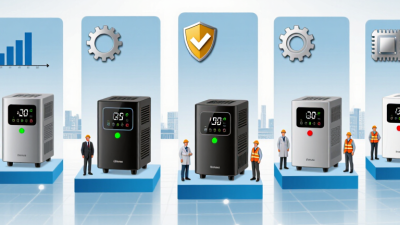
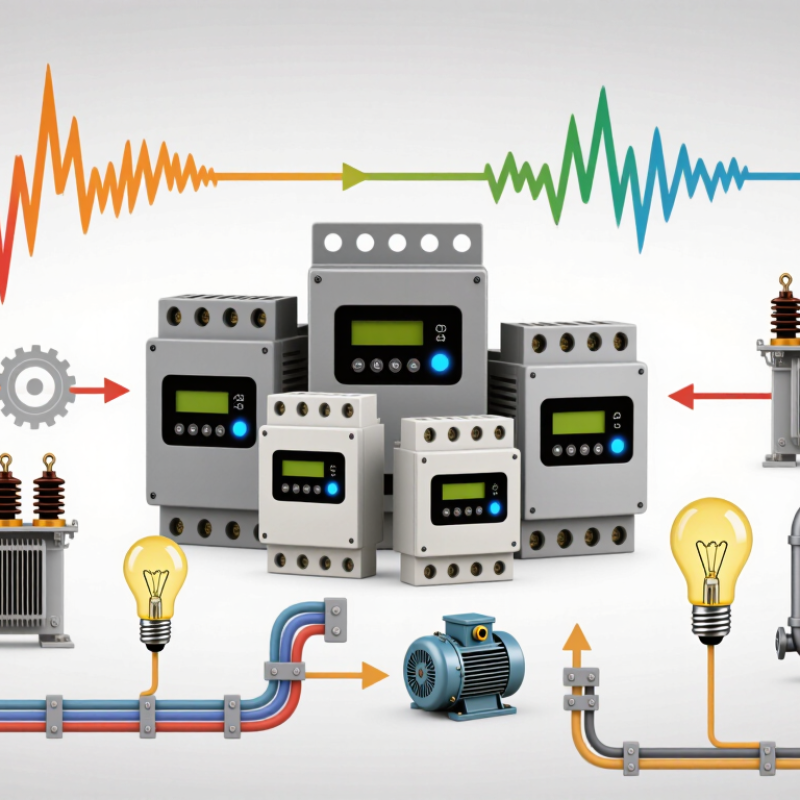
A voltage stabilizer automatically adjusts an unstable input voltage to keep the output close to a fixed level. This representative 230 V operating profile shows how the device can boost low voltage and reduce high voltage before supplying connected equipment.

The 230 V reference reflects a common nominal single-phase supply value. Actual regulation limits, correction speed, and output accuracy depend on the stabilizer design, load, and specified input range.

Why Voltage Stability Matters in Electrical Systems

Voltage stability matters because electrical equipment rarely tolerates careless fluctuations. A stable supply keeps motors, control boards, lamps, and measurement devices within designed limits. When voltage drops, a refrigerator motor may draw more current and heat its windings. When voltage rises, sensitive components can age faster or fail without warning. These problems are not always dramatic. Sometimes, lights simply flicker during a nearby machine’s startup.

A voltage stabilizer monitors incoming voltage and corrects it toward a safer output level. Depending on its design, it may switch transformer taps, regulate electronically, or adjust power through controlled components. The correction happens continuously or in small steps. In field assessments, I would check the load profile before selecting a unit. A 5kw Voltage Stabilizer may suit a defined 5-kilowatt load, but starting currents can exceed its rating. That detail is easy to miss. Wiring length, ambient heat, and unbalanced loads also affect performance.

Stable voltage improves operating consistency and may reduce nuisance shutdowns, overheating, and maintenance calls. It also helps protective devices work more predictably. However, a stabilizer cannot repair damaged wiring or solve every power-quality problem. Poor grounding remains dangerous. Regular inspection should include terminals, ventilation, alarms, and measured input and output voltage. I would not trust a display alone; a calibrated meter can reveal errors. Real conditions often differ from the specification sheet, and that difference deserves attention.

The Main Components of a Voltage Stabilizer

A voltage stabilizer keeps electrical output within a safer range when supply voltage rises or falls. Its operation depends on several coordinated components. The transformer adjusts incoming voltage through different winding taps. A sensing circuit measures the output continuously. It detects changes within fractions of a second.

The controller compares the measured voltage with the selected target. When correction is needed, it activates relays, electronic switches, or a servo motor. These parts select the suitable transformer tap. In a Voltage Stabilizer 240v system, the controller aims to maintain approximately 240 volts for connected equipment. The exact tolerance varies by design.

A display may show input and output readings, while fuses, thermal sensors, and surge protection reduce damage during abnormal conditions. The enclosure supports ventilation, although poor airflow can still cause overheating. That detail is easy to overlook.

Tips: Check the stabilizer’s rated load before installation. Leave space around its vents. Test the output with a calibrated meter, not only the front display. Loose terminals can create heat and unstable readings. In practical maintenance, dust buildup often appears harmless, but it can block cooling paths. Replacement parts should match the original voltage and current ratings. A mistake here may create a new fault instead of solving the old one. Always follow qualified electrical procedures and inspect grounding carefully.

How a Voltage Stabilizer Regulates Electrical Voltage

A voltage stabilizer keeps incoming electrical voltage within a safer operating range. It continuously measures voltage through a sensing circuit. A controller compares that reading with the target level. If voltage falls, the unit boosts it. If voltage rises, it reduces it.

Common designs use automatic transformers, motor-driven tap changers, or electronic buck-boost circuits. The correction happens through a feedback loop. In a workshop, you might hear a small motor move when a heavy machine starts. That movement changes the transformer ratio and restores the output voltage. A High Voltage Stabilizer may use multiple switching stages, insulation barriers, and protective relays for higher electrical systems. IEC 60038 commonly allows public low-voltage supplies around ±10% of nominal voltage, depending on the supply arrangement. That range can still trouble sensitive drives, servers, and medical equipment.

The need is measurable. EPRI’s power-quality assessment estimated annual U.S. losses from disturbances at about $119–188 billion, although the study is older and conditions have changed. A stabilizer cannot repair every problem. It may not remove harmonics, interruptions, or severe surges without additional equipment. IEEE 1159 also treats voltage sag, swell, interruption, and transient events as different power-quality conditions. That distinction matters. A stabilizer sized only from average voltage can fail during a sudden motor start. Site measurements should include load current, response time, temperature, and waveform distortion. Field practice is less tidy than a specification sheet.

Different Types of Voltage Stabilizers

What Is a Voltage Stabilizer and How Does It Work?

Different Types of Voltage Stabilizers

A voltage stabilizer monitors incoming voltage and corrects abnormal rises or drops. It helps equipment receive a steadier electrical supply. The correction may use relays, transformers, electronic switches, or motor-driven controls. However, a stabilizer cannot repair damaged wiring or compensate for poor system design.

Relay-type stabilizers switch transformer taps in fixed steps. They are affordable and practical for refrigerators, lighting systems, and small offices. Servo stabilizers use a motorized variac, offering smoother correction for medical devices, CNC equipment, and laboratory instruments. They respond more slowly, though. Static stabilizers use power electronics and provide very fast correction, often within milliseconds. They suit automation systems and sensitive digital loads. Ferroresonant designs offer strong noise filtering, but they can be heavy, warm, and less efficient.

The International Energy Agency’s Electricity 2024 report forecasts global electricity demand growth of about 4% annually through 2026. More connected loads increase the need for stable power quality. IEC 60038 also defines standard supply voltages, helping engineers select suitable operating ranges. In practice, measured voltage matters more than marketing claims. A 230-volt system with frequent dips needs different protection from a site facing sustained overvoltage. That distinction is often missed. Installers should record voltage variation, load current, response time, and bypass behavior before choosing a stabilizer. Even experienced teams can oversize equipment, creating unnecessary cost and weaker efficiency.

Common Applications and Selection Considerations

A voltage stabilizer keeps supply voltage within a safer operating range when utility power fluctuates. An automatic voltage regulator senses incoming voltage, then uses a buck-boost transformer, servo mechanism, or electronic switching circuit to correct it. The adjustment happens continuously, although response speed varies by design. It cannot repair damaged wiring or replace proper grounding.

Common applications include medical equipment, CNC machines, refrigeration systems, laboratory instruments, and data-center infrastructure. These loads can react badly to brief undervoltage, overvoltage, or repeated switching. The International Energy Agency reported that data centers consumed about 460 TWh of electricity globally in 2022, with demand potentially exceeding 1,000 TWh by 2026. That growth makes power-quality planning less optional. Field experience also shows that refrigerators and motors often need high starting current. A stabilizer sized only for running watts may trip unexpectedly.

Selection should begin with measured voltage, not guesswork. Record the lowest and highest supply readings for several days. Check rated power, surge capacity, response time, efficiency, waveform quality, and allowable input range. IEC 60038 helps define nominal system voltages, while IEC 61000 standards support power-quality assessment. Servo units suit gradual fluctuations; static units respond faster to sensitive electronics. Installation environment matters too. Heat, dust, bypass requirements, and maintenance access can change the practical choice. I would still leave a safety margin, but an oversized unit may waste energy and money.

What Is a Voltage Stabilizer and How Does It Work? - Common Applications and Selection Considerations

Stabilizer Type How It Works Typical Output Regulation Typical Correction Response Output Waveform Common Applications Key Selection Considerations
Relay-Based Stabilizer Uses electronic sensing and electromagnetic relays to switch transformer taps when the input voltage moves outside a preset range. Approximately ±5% to ±10%, depending on the tap arrangement. Typically tens to hundreds of milliseconds, with a stepped correction process. Generally unchanged from the input supply, provided the input waveform is acceptable. Home appliances, televisions, refrigerators, office equipment, and general single-phase loads. Suitable for cost-sensitive applications; check relay life, switching noise, correction steps, and the acceptable output-voltage tolerance of the load.
Servo-Motor Stabilizer A motor-driven variable transformer continuously adjusts the transformer tap in response to voltage feedback. Approximately ±1% to ±3% in many standard designs. Usually slower than static designs; correction speed depends on motor, control system, and voltage deviation. Normally preserves the input waveform because it regulates voltage through transformer adjustment. Machine tools, commercial equipment, air-conditioning systems, laboratory equipment, and larger industrial loads. Consider motor wear, maintenance requirements, acoustic noise, overload capability, phase configuration, and the required correction speed.
Static Electronic Stabilizer Uses power-electronic switches and a controller to add or subtract voltage without mechanical moving parts. Approximately ±1% to ±2% for many commercial systems. Fast response, often within one or a few AC cycles, depending on the design and control method. Usually good, but performance depends on switching topology, filtering, load type, and input power quality. Data-processing equipment, medical electronics, telecommunications, automation systems, and sensitive instruments. Evaluate response time, harmonic distortion, cooling, semiconductor short-circuit protection, bypass operation, and compatibility with nonlinear loads.
Ferroresonant Stabilizer Uses a specially designed transformer and resonant circuit to maintain a relatively constant output voltage over an input-voltage range. Approximately ±1% to ±5%, depending on loading and design. Very fast voltage response because regulation is provided magnetically rather than by a motor. Can provide filtering and transient reduction, but waveform characteristics may vary with load and design. Control systems, communications equipment, instrumentation, and selected low- to medium-power electronic loads. Check audible hum, heat generation, efficiency, inrush current, load compatibility, and limitations with high crest-factor or rapidly changing loads.
Buck-Boost Electronic Stabilizer Uses a buck-boost transformer or power-electronic converter to raise or lower the input voltage by a controlled amount. Commonly ±1% to ±3%, depending on the control system and operating range. Fast to moderate response, depending on whether the design uses static switching or mechanical tap control. Typically maintains the input waveform, although electronic versions may introduce switching-related distortion. Computers, laboratory devices, production equipment, HVAC controls, and installations with recurring overvoltage or undervoltage. Confirm the input-voltage window, correction range, continuous power rating, neutral arrangement, bypass function, and short-circuit protection.
Three-Phase Stabilizer Regulates voltage across three phases using individual phase control, a common control system, or a combination of both. Commonly ±1% to ±3%, depending on the system architecture. Varies by technology; static systems are generally faster than motor-driven systems. Designed to preserve phase relationships, although imbalance and nonlinear loads can affect performance. Industrial motors, CNC equipment, pumps, compressors, elevators, production lines, and commercial electrical systems. Assess phase imbalance, neutral requirements, motor starting current, load balance, phase sequence, fault protection, and total kVA capacity.
Automatic Voltage Regulator with Bypass Automatically regulates voltage during normal operation and provides a bypass path for maintenance or selected fault conditions. Often ±1% to ±5%, depending on the regulating technology. Depends on the internal stabilizer type; bypass transfer time may be important for sensitive loads. Depends on the regulating circuit and bypass design. Server rooms, medical facilities, industrial controls, laboratories, and critical commercial installations. Review bypass interlocking, transfer behavior, alarm functions, monitoring interfaces, maintenance access, redundancy, and electrical safety certifications.
Selection Reference Choose the stabilizer by matching the supply conditions and load characteristics rather than by nominal voltage alone. Select the required tolerance first, then compare technologies that can maintain it under the actual load. Fast-changing loads generally require faster response and stronger overload performance. Confirm total harmonic distortion, transient behavior, and waveform requirements for sensitive equipment. Applicable to residential, commercial, industrial, laboratory, healthcare, and data-processing environments. Check nominal voltage, input range, frequency, phase count, load kW or kVA, power factor, inrush current, efficiency, ambient temperature, altitude, protection, and installation space.

Note: The performance ranges shown are typical engineering reference values. Actual regulation accuracy, response time, efficiency, and capacity vary by design, operating conditions, and manufacturer specifications.

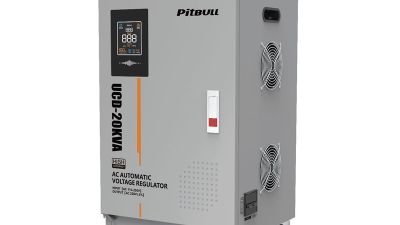
Servo Motor Type Voltage Regulator UCD Series: Features, Benefits, and Selection Guide

The Servo Motor Type Voltage Regulator UCD Series is designed for high-load single-phase power systems that require accurate and dependable voltage control. Its advanced voltage compensation technology responds to fluctuations caused by demanding electrical loads, helping maintain a stable output for premium residences, commercial facilities, workshops, and industrial environments. By reducing the impact of unstable input voltage, it supports the reliable operation of heavy-duty equipment, sensitive electronics, and multiple connected systems.

A servo motor mechanism enables continuous and precise voltage adjustment, offering smoother regulation than simple step-based solutions. This design can help reduce equipment stress, minimize operational interruptions, and improve power quality across the connected load. The regulator is suitable for applications where consistent voltage is important, including production equipment, communication systems, building services, and high-capacity household installations. Its robust construction and compensation capability make it a practical choice for locations with frequent voltage variation or uneven electrical demand.

When selecting a UCD Series regulator, consider the system’s rated voltage, maximum load capacity, starting current, installation environment, and required response performance. It is also important to allow sufficient capacity for future expansion and temporary load surges. Matching the regulator to the actual operating conditions ensures effective protection, stable energy delivery, and dependable long-term performance.

FAQS

What is a voltage stabilizer?

It monitors incoming voltage and keeps the output near a selected level. It may raise 190 volts or reduce 250 volts toward 230 volts. Small details matter.

Why does voltage stability matter?

Voltage fluctuations can overheat motors, age electronic parts, and cause repeated shutdowns. A refrigerator motor may draw extra current during low voltage. Lights may flicker during nearby machine startups.

Can a stabilizer solve every power problem?

No. It cannot repair damaged wiring or guarantee protection during a complete outage. It may also need separate protection against lightning surges and harmonics. Do not expect miracles.

How should a stabilizer be selected?

Measure the lowest and highest input voltage over several days. Check load power, starting current, response time, efficiency, and input range. Do not choose by advertised size alone.

Why can motors cause sizing problems?

Motors, refrigerators, and compressors often need much more current during startup. A unit sized only for running power may trip unexpectedly. Starting demand matters.

What types of voltage stabilizers are available?

Relay-based units adjust voltage in steps and often suit ordinary equipment. Servo units handle gradual changes with mechanical movement. Static units respond faster for sensitive electronic loads.

What installation details affect performance?

Heat, dust, ventilation, cable length, grounding, and unbalanced loads can change results. Keep terminals tight and provide safe maintenance access. Installation is not an afterthought.

How can users check whether a stabilizer works properly?

Compare measured input and output voltage with a calibrated meter. Inspect alarms, terminals, bypass operation, and ventilation regularly. I would not trust the display alone.

Is an oversized stabilizer always better?

Not necessarily. Extra capacity may increase purchase cost and waste energy. A reasonable safety margin helps, but excessive sizing needs justification. Bigger is not automatically safer.

Conclusion

A Voltage Stabilizer is an electrical device designed to maintain a steady output voltage when the incoming supply fluctuates. Voltage stability matters because excessive or insufficient voltage can reduce equipment performance, cause overheating, shorten service life, and interrupt sensitive operations. By delivering a more consistent power supply, a stabilizer helps electrical systems operate safely and efficiently.

The main components of a Voltage Stabilizer typically include a sensing circuit, control mechanism, switching or adjustment elements, and protective features. The device continuously monitors input voltage, compares it with a desired level, and automatically corrects variations through methods such as transformer adjustment, electronic regulation, or voltage conversion. Common types include relay-based, servo-controlled, static, and automatic stabilizers, each offering different levels of speed, precision, and capacity. They are used in homes, offices, workshops, communication systems, and industrial equipment. Selection should consider the connected load, voltage range, response time, accuracy, installation environment, safety protection, and future power requirements.
Charlotte

Charlotte

Charlotte is a dedicated marketing professional with a deep understanding of technology-driven manufacturing, particularly in the field of voltage regulation and intelligent power solutions. With over five years of experience in the industry, she possesses an acute awareness of the nuances that......
Previous How to Choose the Best China Three Phase Voltage Stabilizer?