Leave Your Message
Picking the right Three Phase Stabilizer manufacturers from around the world isn’t just about checking out brand names or comparing prices in a catalog. Honestly, you gotta look beyond that. A reliable manufacturer should be able to prove their equipment can handle the real deal — things like unstable voltage, those dreaded heavy motor starts, heat, dust, and loads that aren’t super even. In this article, we’re taking a closer look at companies like Servomax Limited, Microtek International, and V-Guard Industries, especially how they perform under these tough conditions.
Let’s be real — seeing actual installations beats reading brochures any day. Maybe your factory needs a stabilizer that can protect CNC machines, compressors, pumps, and automated lines all at once. Speed of response is a big deal, no doubt. But so are the correction range, thermal protection, bypass features, how support is handled, and whether spare parts are easy to get. A fancy spec sheet can look great, but it doesn’t quite compare to real-world experience on the ground.
As Dr. Roger C. Dugan, a well-known expert in power quality, once pointed out, "Power quality is ultimately a customer-driven issue." That’s still totally true here. When choosing a stabilizer, you should think about how your actual loads behave — not just the rated capacity. For example, a 100 kVA unit might behave totally differently if your motors keep starting up or if the voltage drops sharply overnight.
There’s no one-size-fits-all ranking that covers everything globally. Market conditions, product series, and installation quality can all vary a lot from place to place. That’s worth keeping in mind. Some manufacturers might put more effort into engineering, while others might excel at local service or just getting products shipped quickly. So, when we compare these brands, we mainly look at their technical design, how credible their manufacturing is, their hands-on experience with actual applications, clarity around warranties, and the support they provide. Honestly, though, it’s tough to be totally sure — because what they claim on paper doesn’t always match up with long-term results in the field.
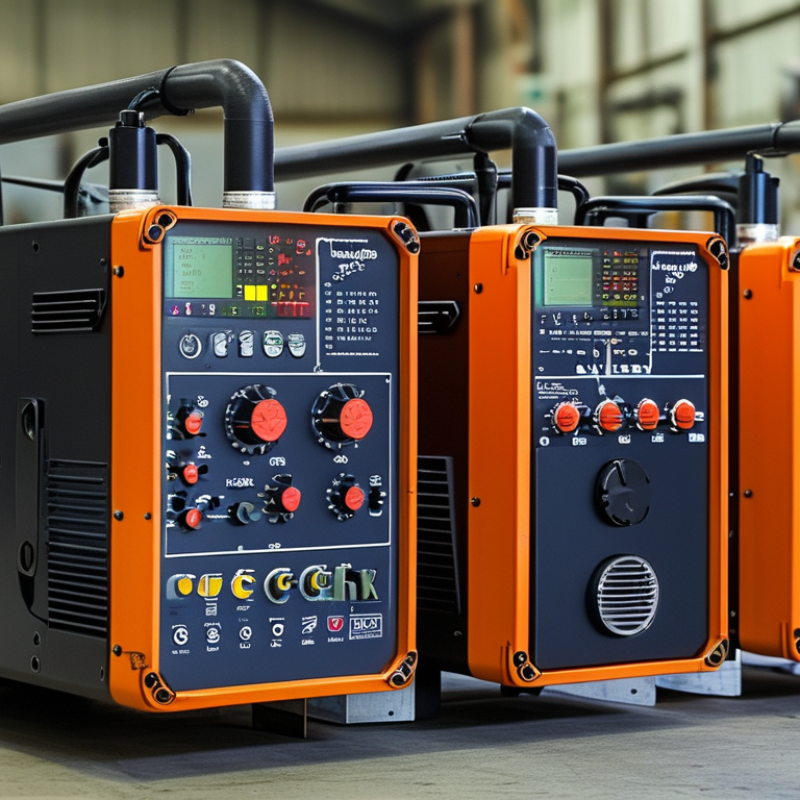
Three-phase stabilizers support industrial equipment where unstable voltage can damage drives, control boards, and motors. In 380–415 V networks, the incoming line voltage may shift with heavy loads, long cables, or generator transfer. A Three Phase Servo Stabilizer corrects these changes through motor-driven variable transformers. Its target is usually ±1% output regulation, measured under defined load conditions.
IEC 60038 identifies 400 V as the standard nominal voltage for many low-voltage three-phase systems. This value sits between common 380 V and 415 V installations. However, actual site readings matter more than a catalogue label. The IEC 61000-4-30 power-quality framework separates steady voltage variation from short dips, swells, and interruptions. A stabilizer may correct slow variation, but it cannot replace an uninterruptible power system during a blackout.
Professional market research continues to show strong demand for power-quality equipment in manufacturing, healthcare, and data infrastructure. The International Energy Agency reported that data-centre electricity use could exceed 1,000 TWh globally by 2026, increasing attention on voltage reliability. Buyers should compare correction speed, overload capacity, phase balancing, efficiency, and bypass design. Ask for test records at 380, 400, and 415 V. ±1% sounds precise. It may not remain precise during severe imbalance or sudden motor starting. That detail is easy to miss. A careful specification should state input range, output tolerance, response time, ambient temperature, and measurement method.
The table compares the three principal three-phase voltage-stabilizer technology categories used in 380–415 V power systems. Values are typical engineering ranges; exact performance depends on the equipment design, load profile, site conditions, and applicable standards.
| Technology Category | Typical Three-Phase Input | Typical Stabilized Output | Regulation Capability | Response Characteristics | Common Power Range | Typical Applications | Main Advantages | Important Considerations |
|---|---|---|---|---|---|---|---|---|
| Servo-Motor Voltage Stabilizer | 380–415 V line-to-line, usually 50 or 60 Hz | 380–415 V line-to-line, according to the selected system voltage | Approximately ±1% to ±3% | Typically tens to hundreds of milliseconds, depending on voltage deviation and motor mechanism | Commonly available from several kVA to several hundred kVA | Machine tools, commercial facilities, motors, HVAC systems, and general industrial loads | Good accuracy, broad capacity range, and suitability for uneven or continuously changing voltage conditions | Mechanical wear, audible operation, and slower correction than fully electronic designs; bypass and maintenance provisions are recommended |
| Static Electronic Voltage Stabilizer | 380–415 V line-to-line, usually 50 or 60 Hz | 380–415 V line-to-line with electronically controlled correction | Approximately ±1% to ±2% | Generally from one cycle to a few milliseconds, depending on topology and control system | Commonly available from a few kVA to several hundred kVA | Data-processing equipment, medical systems, automation, telecommunications, and sensitive electronics | Fast correction, no moving mechanical regulator, low acoustic noise, and precise voltage control | Higher initial cost may apply; heat dissipation, harmonic performance, overload behavior, and semiconductor protection must be evaluated |
| Magnetic or Ferroresonant Stabilizer | Designed for a defined three-phase input window around the nominal 380–415 V system voltage | Fixed nominal output selected for the installation | Typically about ±1% to ±5%, depending on design and load | Very fast inherent response with no mechanical adjustment | Often used in low- to medium-power applications, with larger designs also available | Control circuits, instrumentation, industrial electronics, and locations requiring rugged voltage conditioning | Robust construction, strong short-duration disturbance tolerance, and minimal moving-part maintenance | Can be heavy and may generate audible hum; waveform effects, inrush current, efficiency, and compatibility with nonlinear loads require review |
Engineering note: In a three-phase 380–415 V system, the line-to-line voltage is normally specified as the nominal supply value, while the corresponding line-to-neutral voltage is approximately 220–240 V in a balanced wye-connected system. A stated ±1% regulation target should be verified at the specified input range, load range, frequency, phase-balance condition, and measurement point. Installation should also consider overcurrent protection, earthing, bypass operation, cooling, short-circuit withstand, and compliance with applicable IEC or local electrical requirements.
: It corrects slow voltage changes in three-phase electrical systems. Motor-driven variable transformers adjust the output. This helps protect motors, drives, control boards, and production equipment.
Many systems operate across 380–415 V networks. The nominal reference is often 400 V. Actual site measurements matter more than catalogue descriptions.
It may maintain ±1% under specified load conditions. Severe imbalance, overload, or motor starting can reduce accuracy. The number sounds precise. Reality can be less tidy.
No. It corrects voltage variation, but it does not provide backup power. An uninterruptible power system is needed for interruptions or complete outages.
Compare accuracy, response time, efficiency, overload capacity, phase balancing, and bypass design. Check performance at 380, 400, and 415 V. One attractive specification is not enough.
Slow correction may allow voltage dips to interrupt machinery. Fast response supports equipment during sudden changes. Test results should show actual correction behavior.
Check efficiency at several load levels, not only near full load. Lower losses reduce operating heat and energy waste. A single ideal figure may mislead.
It shows how the unit handles short periods above its rated load. A strong unit should avoid overheating and unnecessary tripping. Dust, heat, and poor ventilation can weaken real-world performance.
Request independent test records, calibrated meter readings, thermal images, and load-bank results. Use balanced and unbalanced loads. Keep the same input changes and ambient conditions for fair comparisons.
No. One design may respond quickly but waste more energy. Another may handle overloads better but regulate less precisely. Long-term site experience can change the assessment.
A Three Phase Stabilizer is essential for protecting sensitive industrial equipment in 380–415 V electrical systems, where stable voltage and reliable power quality are critical. Modern units are available across a wide range of kVA ratings and voltage configurations to support manufacturing, data centers, commercial facilities, and other demanding applications. The most important evaluation factors include voltage accuracy, response time, energy efficiency, overload capacity, and long-term operational reliability.
This comparison focuses on three major technology approaches: large-scale systems designed for IEC compliance and broad three-phase applications, servo-based stabilizers offering approximately 1–3% regulation with extensive service support, and static stabilizers capable of response times below 10 milliseconds while improving energy efficiency. Buyers should also consider IEC 60038, IEC 61000, and IEEE 519 requirements, along with installation conditions, maintenance needs, equipment protection, and total cost of ownership. Selecting the right solution requires balancing performance, compliance, scalability, and lifecycle value.