Voltage swings can really throw a wrench in your operations—disrupting production, damaging delicate equipment, and even shortening the lifespan of your electrical parts. A Smart Voltage Stabilizer is designed to keep things steady when the power supply gets choppy. But here’s the thing—picking the right one isn’t just about comparing prices or advertised capacity. The specific application really matters.
In this guide, I’ve put together a list of ten suppliers from around the world. I looked into practical stuff like their product range, rated capacity, how quickly they respond, protection features, certifications, and technical support. These are the things that help you compare options for different setups—whether it’s a manufacturing line, a busy office building, a lab, or other types of installations. For example, a stabilizer that’s perfect for a small control room might not cut it in a workshop with heavy motor loads.
Don’t just stop at what’s on the box—ask for datasheets, installation guides, warranty details, and proof that their claims are legit. Make sure they’ve got local service options and replacement parts available too. All of these little details can really influence the true cost of owning and maintaining the equipment.
And don’t forget—no list is perfect. Supplier rankings can shift over time as products change, service networks expand, or market conditions shift. Plus, regional availability plays a big role in what you can actually buy. So, think of this guide as a helpful starting point. Always double-check specifications directly with each supplier. Doing your homework upfront might not be as thrilling as seeing a top-ranked list, but it can save you from making a costly mistake down the line.
Smart Voltage Stabilizers: Definition, Purpose, and Operating Principles
Smart Voltage Stabilizers: Definition, Purpose, and Operating Principles
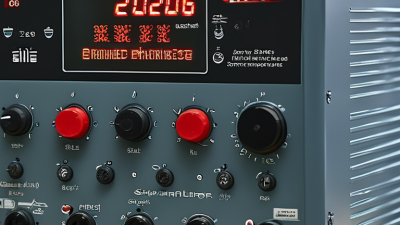
A smart voltage stabilizer is an automatic device that keeps output voltage within a controlled range. It protects equipment from low voltage, overvoltage, and frequent fluctuations. These problems can overheat motors, reset computers, or shorten the life of sensitive electronics. Unlike a basic regulator, a smart model uses sensors and a control processor. It measures incoming voltage continuously. Small changes matter.
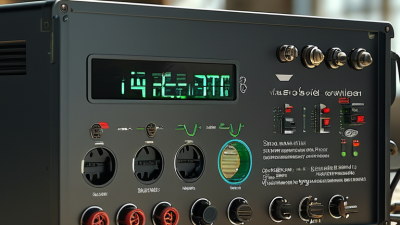
In operation, the stabilizer compares measured voltage with a programmed target. If the supply drops, it raises the output through buck-boost transformers, electronic switches, or servo mechanisms. If the supply rises, it reduces the output. Relay-based designs react in steps, while electronic designs usually respond faster. The display may show input voltage, output voltage, load level, and fault status. That delay matters.
Practical testing should include response time, accuracy, thermal performance, and behavior under uneven loads. A stabilizer is not a complete substitute for grounding, surge protection, or suitable circuit breakers. In industrial panels, loose terminals and poor ventilation can undermine excellent specifications. Reality is messier. Engineers should also check waveform distortion, standby consumption, noise, and maintenance access. Some devices advertise wide correction ranges but deliver less performance near their maximum load. That deserves careful verification.
Key Criteria for Ranking Global Voltage Stabilizer Suppliers
Ranking the top 10 global Voltage Stabilizer suppliers requires more than comparing product prices. The IEA’s Electricity 2024 report projects global power demand to grow by about 4% annually through 2026. This growth increases pressure on aging grids, industrial equipment, and commercial buildings. Supplier evaluation should begin with proven voltage regulation accuracy, response time, overload protection, and thermal performance. IEC 61000-4-30 provides a useful framework for measuring power quality. A credible supplier should disclose test conditions, not only advertise impressive percentages. Look for independent laboratory reports, traceable calibration, and documented factory inspections. Field experience matters here. A stabilizer installed beside a dusty production line faces different risks from one used in a clean server room.
Renewable integration adds another ranking factor. IRENA’s Renewable Capacity Statistics 2024 recorded 473 GW of renewable capacity added worldwide in 2023.
Distributed generation can create fluctuating voltage conditions, especially in weak local networks. Suppliers should therefore demonstrate performance during rapid input changes, low-voltage events, and unbalanced loads. After-sales support also deserves measurable scoring: spare-part availability, technician response time, warranty exclusions, and remote diagnostics. IEEE 519 can help assess related power-quality concerns, although it does not replace product-specific testing. Numbers need context. A neat scorecard can still mislead if it ignores installation quality or regional service capacity. I would also question suppliers that publish efficiency without defining load level, ambient temperature, or test duration. Reliability is rarely proven by a brochure alone.
Market Overview of the Top 10 Worldwide Suppliers
The global smart voltage stabilizer market is shaped by ten leading supplier groups across Asia, Europe, North America, and emerging industrial regions. They serve factories, hospitals, data centers, commercial buildings, and residential networks. Their products commonly combine microprocessor control, automatic voltage regulation, remote monitoring, and overload protection.
Market leadership depends on more than production volume. Experienced suppliers provide documented efficiency tests, response-time data, installation guidance, and regional service teams. A Low Voltage Stabilizer for a clinic may need quiet operation and stable output, while a factory unit may require strong surge handling and cabinet integration. Buyers often compare correction speed, capacity range, thermal design, warranty terms, and replacement-part availability.
Field assessments also reveal uneven performance. Some suppliers offer advanced dashboards but limited local support. Others provide durable hardware but weaker software integration. Published efficiency figures may use different testing conditions, making direct comparisons imperfect. That matters.
The strongest suppliers usually maintain certified manufacturing systems and test units under changing loads, high temperatures, and unstable input conditions. Their technical teams can review cable length, grounding, harmonics, and load-starting behavior before recommending equipment. Yet procurement teams should request site-specific evidence, not rely only on catalog claims. A supplier’s reputation helps, but measured performance remains more reliable.
Top 10 Smart Voltage Stabilizer Suppliers Worldwide — Market Overview
Nominal household voltage varies by market, shaping the input-voltage conditions stabilizers are designed to handle. This comparison shows representative single-phase supply voltages, not supplier sales or market shares.
Values are nominal system voltages in volts; actual supply conditions and permitted tolerances vary. Figures are representative of commonly used national supply systems (IEC 60038 and national standards).
Product Technologies and Voltage Stabilizer Applications
Modern voltage stabilizer suppliers use several control technologies for different electrical conditions. Servo motor systems correct voltage gradually and suit workshops, clinics, and packaging lines. Static stabilizers respond faster because electronic switches adjust output without moving parts. They work well with sensitive laboratory instruments and automated control cabinets.
A 5kw Voltage Stabilizer can protect office equipment, refrigeration units, and small production machines from unstable supply. Its real performance depends on input range, response time, load type, and installation quality. A resistive load behaves differently from a compressor or welding machine. This detail is often underestimated.
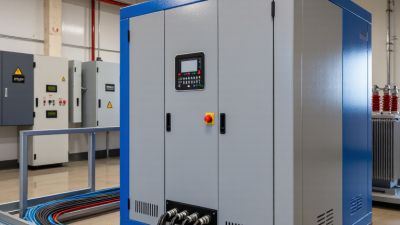
Industrial suppliers increasingly combine microprocessor monitoring, bypass protection, thermal sensors, and digital displays. These features help technicians record voltage changes and identify repeated faults. In data rooms, low-noise operation and rapid correction matter more than simple capacity. In rural facilities, wide input tolerance may be more valuable. Field testing shows that cable length, grounding, and poor ventilation can reduce expected performance. Specifications are useful, but they are not the whole story. Sometimes, the installation is the weak point.
Supplier Comparison by Quality, Certification, and Service
Comparing the top 10 smart voltage stabilizer suppliers requires more than checking prices. Quality appears in copper winding consistency, response speed, heat control, and enclosure strength. For a Voltage Stabilizer 240v, ask for load-test records at low, normal, and peak input conditions. A supplier should provide clear efficiency data, protection settings, and calibration results. Factory inspection reports add useful evidence.
Certification also separates serious manufacturers from weak competitors. Request current certificates for electrical safety, electromagnetic compatibility, and quality management systems. Verify the certificate scope, issuing body, and production site. A document with no traceable model number raises concern. It happens more often than expected. Certification supports trust, but it does not replace independent testing or careful sample inspection.
Service quality becomes visible after installation. Compare technical response times, spare-part availability, remote diagnosis, and warranty procedures. Strong suppliers provide wiring guidance, fault codes, and operator training in practical language. Their engineers should explain voltage thresholds without hiding limitations. In field assessments, some suppliers answer quickly but offer shallow solutions. That is a warning. Others provide detailed reports, yet their delivery schedules remain uncertain. Buyers should score quality, certification, and service separately, then record evidence for every score. A thoughtful comparison may reveal weaknesses that polished sales documents conceal.
How to Select the Right Smart Voltage Stabilizer Supplier
Top 10 Smart Voltage Stabilizer Suppliers Worldwide
How to Select the Right Smart Voltage Stabilizer Supplier
Selecting a smart voltage stabilizer supplier requires more than comparing prices. Check the supplier’s engineering experience with your equipment type, voltage range, load profile, and installation environment. A supplier should provide clear specifications, test reports, calibration records, and protection details. Look for functions such as overload protection, bypass operation, temperature monitoring, and remote fault alerts. These features matter when a factory runs continuously or a medical device cannot tolerate sudden voltage changes.
Request a practical sizing review. Share the equipment’s starting current, daily operating hours, and acceptable output tolerance. Reliable suppliers should explain their calculations instead of offering a quick model number. Inspect manufacturing quality through enclosure details, terminal design, cooling paths, and component traceability. Independent certification can support credibility, but it should match the actual product series. A certificate alone proves little. I have seen buyers overlook service response time, then wait days for basic troubleshooting. That mistake can become expensive.
Tips: Ask for a sample test or site assessment before ordering. Confirm warranty coverage, spare-parts availability, software updates, and technician training. Compare total ownership cost, not only purchase price. Review the supplier’s references from similar operating conditions. Ask what happens during a bypass event. The answer should be specific, documented, and easy to verify. Some suppliers may sound confident while avoiding difficult questions. That is a warning sign.
Relay Type Voltage Regulator ZMA-K Series: Features, Applications, and Selection Guide
The Relay Type Voltage Regulator ZMA-K Series is designed for environments where unstable grid conditions can affect household appliances and light commercial equipment. Its relay-based switching structure adjusts the input voltage in defined steps, helping correct overvoltage, undervoltage, and local grid distortion while maintaining a more consistent output. This is increasingly relevant as the International Energy Agency’s *Buildings 2023* report indicates that buildings account for about 30% of global final energy consumption, with appliances contributing significantly to residential electricity demand.
For home refrigerators, air conditioners, washing machines, televisions, and office equipment, the ZMA-K Series provides practical protection against voltage fluctuations that may cause overheating, shortened service life, or unexpected shutdowns. Its broad adaptability makes it suitable for regions with variable utility quality, while built-in functions such as overload protection, surge suppression, and time-delay control can improve operational safety. Relay regulation is particularly appropriate for general-purpose loads that do not require the ultra-fast correction associated with sensitive laboratory or medical systems.
When selecting a ZMA-K model, users should first match rated capacity with the appliance’s continuous and starting power, especially for motor-driven loads. Input-voltage range, output accuracy, response time, number of correction steps, installation method, and protection features should also be evaluated. For locations with frequent low-voltage events, a wider correction range is preferable; for mixed household loads, additional attention should be given to peak current tolerance, thermal management, and automatic recovery after power interruption.
FAQS
Compare regulation accuracy, response time, overload protection, thermal performance, and service capacity. Price alone misleads. Request test conditions, calibration records, and factory inspection evidence.
Renewable generation and weak networks can create rapid voltage changes. Suppliers should test low-voltage events and unbalanced loads. Real networks are messy. Ask for results under changing input conditions.
Request electrical safety, electromagnetic compatibility, and quality management certificates. Verify the model number, issuing body, and production site. Paperwork can still disappoint. Independent laboratory reports provide stronger evidence.
Check the load level, ambient temperature, input range, and test duration. Efficiency figures are not comparable without matching conditions. Numbers need context. A glossy percentage proves very little alone.
A clinic may need quiet operation and stable output. A factory may require surge handling and cabinet integration. Site conditions matter. Consider dust, heat, cable length, grounding, and starting loads.
Service affects uptime after installation. Compare technician response times, spare-part availability, remote diagnosis, training, and warranty exclusions. Support must be measurable. Ask how faults are handled on weekends or during production.
Request load-test records at low, normal, and peak input conditions. Review wiring guidance, protection settings, fault codes, and calibration results. Sample inspection helps. Installation quality can weaken an excellent unit.
Reputation offers useful background, but measured performance remains more dependable. Ask for field evidence from similar dusty, hot, or unstable environments. Brochures are incomplete. I would still question missing test durations and unclear warranty limits.
Conclusion
This article explains what a Smart Voltage Stabilizer is, why it is used, and how it regulates voltage to help protect electrical equipment and maintain a stable power supply. It outlines practical criteria for assessing suppliers worldwide, including product quality, technical capabilities, certifications, manufacturing experience, customer support, and service coverage. The overview compares the types of technologies and applications commonly found across the global supplier landscape without focusing on individual brands.
Readers will also learn how voltage stabilizers are used in settings with different power requirements and how to compare suppliers for reliability, compliance, and after-sales service. The final section offers a structured approach to choosing a suitable supplier: define the application and load requirements, confirm compatibility and relevant certifications, evaluate performance and service terms, and consider long-term operating needs. Together, these points provide a clear foundation for making an informed purchasing decision.