So, picking the right SVC stabilizer from China isn't just about crunching numbers on price and rated capacity—honestly, that's only half the story. You've really got to think about whether the model can handle the actual electrical quirks at your site. I mean, think about it: voltage fluctuations, the type of load you're running, whether it's single-phase or three-phase, and even where you're going to install the thing. All of that stuff matters way more than you'd think. Here’s the thing – a factory might tell you to go with a 100 kVA unit, but that could be a recipe for disaster if your motors pull a lot of current when they start up. So, don’t just take their word for it. Instead, get your hands on some real data. Measure the input voltage at the busiest times – you want to see the lowest and highest readings. Also, check if your gear is single-phase or three-phase – that makes a big difference. And think about sensitive equipment like CNC machines, medical devices, packaging lines, or those data servers humming in the back. They’ve got different voltage tolerances, sometimes wildly so. Yeah, it’s the little things that trip you up.
When you're picking an Svc Stabilizer, you've got to make sure it delivers steady output and handles voltage fluctuations without lagging. Also, don't forget about overload capacity – that's a biggie. Now, reach out to those Chinese manufacturers and grill them for wiring diagrams, efficiency numbers, protection features, and their factory test records. But here's the thing: a truly reliable supplier won't just hand those over – they'll walk you through how they test things like temperature rise, response time, and accuracy. And they should definitely be upfront about maintenance and give you product info you can trace. If they're vague, that's a red flag.
You know what? Capacity alone shouldn't be your guide. It's just one piece of the puzzle. Think about it – a stabilizer sitting in a dusty workshop is going to need way more environmental protection than one in a clean office. So before you pull the trigger, get an experienced electrical engineer to double-check the cable size, breaker selection, ventilation, and bypass arrangements. And here's the kicker: even the pros mess up predicting future load growth. And that mistake? It can get expensive.
Honestly, there's no one-size-fits-all best model out there. The most reliable pick is one that really weighs technical performance, support, documentation, and the total cost of ownership. So, don't just go with the first thing you see—compare at least two or three options. And dig into the assumptions they're based on. Taking your time now can save you headaches later—protecting your equipment, cutting downtime, and keeping your power quality solid in the long run.
An SVC stabilizer is a power-quality device that controls reactive power in an electrical system. SVC means Static Var Compensator. It uses thyristor-controlled reactors and capacitors to balance voltage quickly. When voltage falls, the system supplies reactive power. When voltage rises, it absorbs excess reactive power.
This response happens within milliseconds. It helps reduce voltage fluctuation, flicker, and poor power factor in factories, data centers, and renewable-energy sites. A suitable model depends on rated voltage, load capacity, response speed, and harmonic conditions. Engineers should review actual load records, not rely only on estimated demand. A model that looks powerful on paper may perform poorly with rapidly changing loads. That mistake is more common than expected.
Tips: Measure peak and average load separately. Check short-circuit capacity and available installation space. Ask for efficiency data, protection functions, cooling requirements, and test records. Harmonic filters may be necessary when variable-speed drives or welding equipment are connected. Professional commissioning should include voltage tests under different load conditions. Leave operating margin for future expansion, but avoid excessive oversizing. Bigger is not always better.
Choosing a voltage stabilizer is not only about purchase price. In workshops, unstable input can cause flickering lights, control errors, and overheated equipment. A China-made SVC stabilizer can offer practical value when its production process is transparent. Reputable factories use copper windings, calibrated servomotors, and protective enclosures. They also test response time, output accuracy, insulation, and heat behavior before shipment. These details matter during long operating hours. Small failures become expensive interruptions.
The strongest reason to consider China-made equipment is flexible engineering. Manufacturers often adjust input ranges, capacity, cabinet size, and terminal layouts for different sites.
A Svc 5000va Automatic Voltage Regulator may suit a small office, laboratory, or light production line, but the load profile must be checked first.
A technician should measure starting currents, daily voltage changes, and ambient temperature. Guessing is risky. A model that looks adequate on paper may trip when motors start.
Cost control is another advantage, supported by mature electrical supply chains and large-scale manufacturing. Still, low price alone proves nothing. Ask for test records, component specifications, warranty terms, and local technical support. Clear documentation builds trust.
My practical experience is that installation quality often decides the final result. Loose terminals, poor grounding, or blocked ventilation can undermine a good stabilizer. China-made products deserve consideration, but buyers should verify each claim and allow room for honest re-evaluation.
Selecting an SVC stabilizer starts with measured site data, not a catalogue rating. Record active power, existing power factor, peak demand, voltage fluctuations, and load-starting conditions. For basic compensation, use Q = P × (tan φ1 − tan φ2) Here, Q is the required reactive capacity in MVAr, P is active power in MW, and φ represents the original and target power-factor angles.
For example, a 2 MW load improving from 0.75 to 0.95 power factor needs about 1.1 MVAr. Add a practical margin, often 10–20%, for load changes and measurement uncertainty. If voltage regulation is the main goal, estimate capacity with Q ≈ ΔV × Ssc where ΔV is the desired voltage correction and Ssc is the local short-circuit capacity. This estimate needs verification. A neat spreadsheet is not enough. Harmonics, rapid motor starts, and transformer impedance can change the result.
Tips: Measure the worst operating period for several days. Check whether the load is balanced across phases. Confirm the SVC response time required by sensitive equipment. An Ac Stabilizer may help smaller voltage issues, but it should not replace a proper reactive-power study. Field engineers should compare calculated capacity with simulation results and a staged commissioning test. Oversizing can increase cost and create unnecessary operating losses. Undersizing is more frustrating.
Choosing the right SVC stabilizer starts with the electrical load, not the advertised capacity. Record the incoming voltage, phase arrangement, frequency, and actual current during peak operation. Measure it. Do not guess.
A factory with CNC machines may need fast voltage correction and strong protection against sudden load changes. A server room requires stable output, low response time, and careful attention to harmonics. Lighting systems, pumps, welding equipment, and medical devices behave differently. An Avr Stabilizer can suit sensitive single-phase equipment, while an SVC model may better manage larger three-phase loads. Check the motor starting current, not only its running current. A small error here can cause nuisance trips or unstable output.
Leave practical capacity above the measured demand, especially where machines may expand. A 100 kVA load does not always justify a 100 kVA stabilizer. Consider a reserve margin based on operating conditions and future additions. I have seen specifications fail because testing was performed during quiet daytime hours. That detail matters. Review bypass operation, cooling space, response time, overload behavior, and maintenance access before selection. Ask for test records, wiring diagrams, efficiency data, and clear installation requirements. The model should match the load profile, site temperature, and power quality problem—not just a catalog number.
Choosing the right SVC stabilizer starts with the load, not the advertised price. Record the equipment’s rated power, starting current, and daily operating pattern. Motors, compressors, and welding equipment may demand short bursts that exceed their nameplate ratings. A model with only equal capacity can still trip unexpectedly.
Compare the input voltage range carefully. A wide correction range helps in areas with unstable utility power. Check output accuracy, response time, and waveform quality as well. Sensitive control systems may need tighter voltage regulation than heaters or lighting. Ask for measured test data, not vague performance claims. Small details matter.
I also inspect protection functions, including overload, over-temperature, phase loss, and bypass operation. Clear alarms and a readable display make fault checks faster on a noisy factory floor. Efficiency affects heat, electricity use, and cabinet ventilation. Confirm the enclosure rating before placing the unit near dust or moisture. Measure twice.
Installation space is easy to underestimate. Leave room for cable bending, airflow, and maintenance access. Review terminal size, cooling method, noise level, and grounding requirements with a qualified electrician. Service availability and spare-part support should be compared before purchase. A lower price may become expensive after one failed control board. I once focused too much on capacity and overlooked response time; that was a poor comparison. Manufacturer test reports, inspection records, and applicable safety certifications provide stronger evidence than sales language.
Key specifications to compare before buying a servo voltage stabilizer
When comparing SVC stabilizers, check output voltage accuracy, correction response time, and efficiency together. A typical industrial unit may provide approximately ±1–2% output accuracy, a response time of about 1–2 seconds, and efficiency of roughly 95–98%. The correct model should also match the required capacity, input-voltage range, load type, overload demand, and installation environment. Confirm the final values against the supplier’s datasheet.
China Best SVC Stabilizer: How to Verify Quality, Safety, and Supplier Reliability
Choosing a China SVC stabilizer requires more than comparing prices and rated capacity. Start by checking the actual input range, output accuracy, response speed, and overload protection. For a Stabilizer 220v application, request test data under low voltage, sudden load changes, and continuous operation. Clear records matter. Ask for insulation, temperature-rise, grounding, and endurance test reports from qualified laboratories.
Inspect the supplier’s technical process, not only its product photos. A reliable manufacturer should provide wiring diagrams, component specifications, serial-number traceability, and an understandable warranty. Factory videos help, but an independent inspection gives stronger evidence. During a sample test, listen for unusual noise and check terminal heating after several hours. Small details often reveal weak assembly. I have learned this from field evaluations.
Do not accept certificates without checking their scope, validity, and matching model numbers. Ask how failures are analyzed and how replacement parts are supplied. Fast replies are useful, but consistent technical answers are more important. Request references from similar electrical environments, when possible. No checklist is perfect. A supplier may pass a sample test and still need closer monitoring during mass production. Keep written records, define acceptance criteria, and verify every shipment before installation.
| Evaluation Dimension | Recommended Selection or Verification Point | Practical Data or Benchmark | Documents or Tests to Request | Risk if Ignored |
|---|---|---|---|---|
| Load Capacity | Select the stabilizer by apparent power in kVA, not only by the total active power in kW. | A common engineering allowance is 20–30% spare capacity. For a 10 kW load at 0.8 power factor: 10 ÷ 0.8 = 12.5 kVA; a 15 kVA class unit may provide useful margin. | Load list, motor-starting information, measured peak current, and rated output current. | Overheating, nuisance protection trips, reduced service life, or unstable output during peak demand. |
| Input Voltage Range | Choose an input range that covers the measured minimum and maximum utility voltage, including seasonal variation. | Typical product classes may include 160–250 V or 304–456 V input ranges, depending on single-phase or three-phase configuration. The actual range must be confirmed on the datasheet. | Factory datasheet, calibration record, and a site voltage survey covering at least several operating periods. | The unit may reach its correction limit, bypass the load, or disconnect when the supply is unusually low or high. |
| Output Voltage and Accuracy | Match the nominal output to the equipment requirement and verify accuracy under no-load and rated-load conditions. | Many SVC units are specified at approximately ±1% output accuracy, but the tolerance may be wider during extreme input voltage or overload conditions. | Test report showing input voltage, output voltage, load percentage, power factor, and measurement instrument accuracy. | Sensitive equipment may experience undervoltage, overvoltage, control faults, or reduced operating stability. |
| Phase Configuration | Use single-phase equipment for single-phase loads and three-phase equipment for balanced or three-phase loads. Confirm whether regulation is independent by phase. | Common systems are 220–240 V single-phase and 380–415 V three-phase at 50 Hz; local nominal voltage and frequency must govern the selection. | Wiring diagram, phase-regulation method, neutral requirement, phase-sequence requirements, and installation manual. | Unbalanced output, incorrect phase rotation, neutral overload, or incompatibility with the connected equipment. |
| Response and Correction Speed | Prioritize faster correction for equipment exposed to frequent voltage fluctuations or rapid load changes. | Product specifications commonly state response times in milliseconds or correction speeds in volts per second. A quoted figure is meaningful only when its test conditions are provided. | Oscilloscope or power-quality test record showing transient input change, output recovery time, and load level. | Output may remain outside the permitted range during voltage changes, affecting control systems and precision equipment. |
| Motor and Transformer Loads | Check inrush current from motors, compressors, pumps, transformers, and other inductive loads before finalizing the capacity. | Starting current can be several times the running current, depending on the motor type, starting method, and mechanical load. A simple kW comparison is insufficient. | Motor nameplate, starting-current profile, soft-starter or variable-frequency-drive details, and supplier sizing calculation. | Voltage collapse, repeated protection trips, contactor chatter, or premature servo-motor wear. |
| Efficiency and Thermal Design | Compare efficiency, ventilation, derating, operating temperature, and allowable humidity for the intended installation location. | Efficiency depends on load level and design. Request a curve or test value at 25%, 50%, 75%, and 100% load instead of relying only on a single headline value. | Temperature-rise test, fan specification, derating curve, enclosure protection rating, and installation clearances. | Excessive energy loss, hot spots, shortened component life, or thermal shutdown. |
| Safety Protection | Verify protection against overvoltage, undervoltage, overload, short circuit, overtemperature, phase loss, and bypass conditions where applicable. | Protection thresholds and delay times must be clearly stated. The stabilizer should not be treated as a substitute for upstream circuit protection or proper grounding. | Protection logic diagram, alarm list, trip-test record, emergency-stop details, and grounding instructions. | Fire, electric-shock, equipment-damage, or unsafe restart hazards. |
| Electrical Safety and Compliance | Confirm that the design and installation meet the electrical rules applicable in the destination country. | Relevant references may include IEC 60038 for standard voltage ranges, IEC 61558-1 where transformer safety requirements apply, and applicable low-voltage assembly and EMC requirements. | Declaration of conformity, applicable test reports, insulation-resistance test, dielectric-strength test, protective-earth continuity test, and EMC documentation. | Import delays, failed site acceptance, non-compliance penalties, or unsafe operation. |
| Control System and Components | Inspect the servo motor, carbon brushes or contact mechanism, control board, transformer, circuit breaker, cooling fan, and terminals. | Wear parts should be identifiable and replaceable. Components should have traceable ratings suitable for the unit’s voltage, current, and duty cycle. | Bill of materials, component datasheets, wiring diagram, spare-parts list, and preventive-maintenance schedule. | Difficult maintenance, inconsistent performance, long downtime, or unavailable replacement parts. |
| Factory Quality Control | Require routine testing of every finished unit rather than relying only on a generic product certificate. | A meaningful final test should record serial number, rated capacity, input range, output accuracy, protection functions, insulation, grounding, and visual inspection results. | Signed factory acceptance test, calibration certificates, inspection checklist, and photographs of the tested unit. | Actual delivered performance may differ from the advertised specification. |
| Supplier Reliability | Assess technical capability, production consistency, export experience, service response, and ability to support the destination market. | A reliable supplier should provide a verifiable legal entity, factory or production evidence, stable documentation, clear warranty terms, and defined response times. | Business registration, factory audit or video inspection, customer references, warranty policy, service-level agreement, and sample purchase documentation. | Delivery disputes, unsupported equipment, counterfeit documents, or difficulty obtaining spare parts. |
| Installation Environment | Check ambient temperature, altitude, dust, moisture, ventilation, noise limits, and available floor or wall space. | Typical industrial designs may require derating above a specified ambient temperature or altitude. Exact limits vary by design and must be stated by the supplier. | Environmental specification, enclosure rating, acoustic data, installation drawing, cable-entry details, and derating instructions. | Overheating, corrosion, dust accumulation, excessive noise, or failure to fit the installation area. |
| Monitoring and Communication | Select a display and communication interface appropriate for the operating team and maintenance system. | Useful measurements include input voltage, output voltage, load current, frequency, alarm status, temperature, and bypass state. Remote communication may use dry contacts, RS-485, or another specified interface. | Communication protocol, register map, alarm definitions, display accuracy, and demonstration under normal and fault conditions. | Delayed fault detection and difficulty proving whether the stabilizer or utility supply caused a problem. |
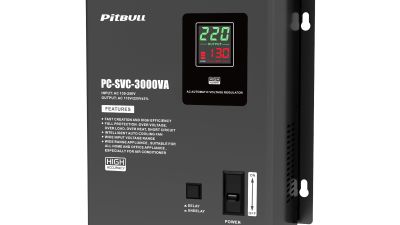
The Servo Motor Type Voltage Regulator PC-SVC Series reflects the growing demand for dependable power-quality solutions in residential, commercial, and industrial environments. Market insights associated with the servo motor voltage regulator sector point to increasing interest in accurate voltage control, improved equipment protection, and stable operation as electrical systems become more sensitive and interconnected. These trends are supporting the adoption of regulators that can respond smoothly to voltage fluctuations while maintaining consistent output performance.
Engineered for precision power management, the PC-SVC Series uses a high-performance control system to enable accurate voltage adjustment across a wide operating range. Its stable output makes it suitable for household appliances, industrial machinery, precision instruments, laboratory equipment, and medical systems where reliable power quality is essential. As users place greater emphasis on operational continuity, energy efficiency, and protection against unstable supply conditions, servo-controlled regulation technology offers a practical solution for applications requiring dependable and responsive electrical performance.
It may offer flexible engineering, competitive pricing, and practical protection for unstable electrical input. Quality still requires verification.
It can support offices, laboratories, lighting systems, and light production lines. Motors and compressors need extra capacity for starting currents.
Record rated power, starting current, daily operating hours, and voltage changes. Do not rely on nameplate capacity alone.
Compare input range, output accuracy, response time, waveform quality, efficiency, and protection functions. Small differences can matter.
Overload, over-temperature, phase-loss, and bypass protection can reduce operating risks. Clear alarms help during noisy factory inspections.
Loose terminals, poor grounding, or blocked ventilation can damage performance. Leave space for cable bends, airflow, and maintenance.
Request test records, component specifications, warranty terms, inspection reports, and technical support details. Sales language is weaker evidence.
No. A cheap unit may become costly after a control-board failure or difficult repair. I once focused too much on capacity.
Flickering lights, control errors, overheating, and unexpected shutdowns may appear. These interruptions can grow expensive over long operating hours.
Confirm the load profile, cabinet space, cooling method, noise level, grounding, spare parts, and service access. Measure twice.
Choosing the right Svc Stabilizer requires a clear understanding of how it regulates unstable voltage and protects electrical equipment from fluctuations, surges, and undervoltage. This guide explains the operating principles of servo voltage correction and highlights why China-made stabilizers can offer practical advantages, including competitive pricing, flexible configurations, efficient production, and broad application options. It also introduces a simple method for calculating the required capacity by evaluating connected load, starting current, power factor, and future expansion needs.
Different electrical loads require different stabilizer models, so users should compare rated capacity, input voltage range, response speed, regulation accuracy, overload protection, cooling design, noise level, and energy efficiency. Before purchasing, it is equally important to verify product quality through technical documentation, testing records, safety protection systems, and reliable after-sales support. Selecting a qualified supplier with transparent specifications, consistent manufacturing standards, and suitable customization capabilities helps ensure stable operation, longer service life, and better overall value.