Leave Your Message
0%

Picking out an Industrial Voltage Stabilizer in 2026 isn’t just about comparing prices or going with the most advertised accuracy. Honestly, it’s a bit more involved. Think about a factory—when motors start up, you might see voltage dips. Nearby welding equipment can cause sudden spikes, and sometimes, there are uneven phases across the production line. All of that can damage sensitive drives, mess up automation, and quietly wear out your equipment faster than you’d like. So, the key to choosing the right stabilizer is to start with real, measured data, not just assumptions or estimates.

First off, spend some time recording the incoming voltage over a few days of normal operation. Keep track of the lowest and highest readings, any load changes, and how often power outages happen. Don't forget to calculate the actual load in kVA, including the starting currents for motors and compressors. If you pick a stabilizer that's only designed for average loads, it might completely fall short during peak demand times. Sadly, that’s a pretty common mistake—and it can get pretty pricey, too.

When evaluating options, also look at how quickly the stabilizer reacts, how precise the output remains, and whether it can keep phases balanced. Make sure it has good overload protection, a reliable bypass function, proper cooling, and easy access for maintenance. If you’re installing equipment with variable-frequency drives or rectifiers, harmonic distortion becomes a big deal—don’t overlook that.

Above all, a good industrial voltage stabilizer should really match your site’s needs, not just what’s listed in a catalog. Check if the unit is suitable for indoor environments with dust, humidity, and temperature variations. Also, review test reports, warranty info, service response times, and how easy it is to get replacement parts from the manufacturer. If possible, get an independent inspection before you commit—that can boost your confidence. Still, no matter what, a qualified electrical engineer’s assessment is priceless. Relying solely on a spreadsheet or incomplete measurements can be risky.

Ultimately, the best choice balances solid technical performance, lifecycle costs, and operational risks. Leave some room for future growth, but don’t pay for capacity you’ll never need. While smarter monitoring tools are helpful in 2026, some good old-fashioned field checks and verification are still important. Trust me, it’s all about finding that sweet spot that keeps things running smoothly without breaking the bank.
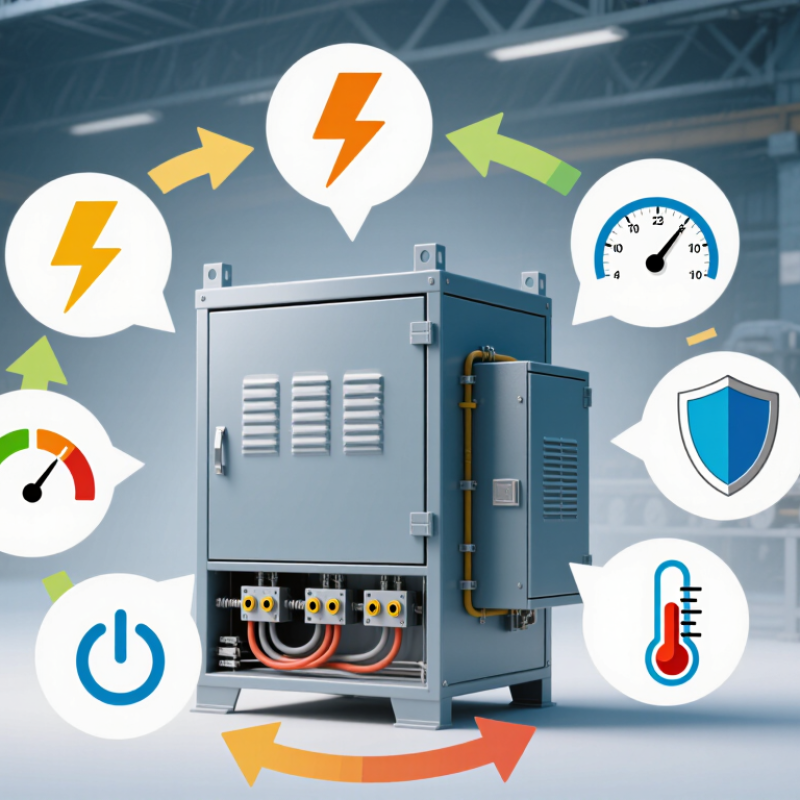
How to Choose an Industrial Voltage Stabilizer in 2026?

What Is an Industrial Voltage Stabilizer and Why Is It Needed?

An industrial voltage stabilizer controls unstable electricity before it reaches sensitive machinery. It corrects low voltage, overvoltage, and phase imbalance. This protection matters in factories, where motors, CNC equipment, sensors, and control systems share one electrical supply. A sudden drop can overheat a motor. A rise can damage circuit boards or stop production.

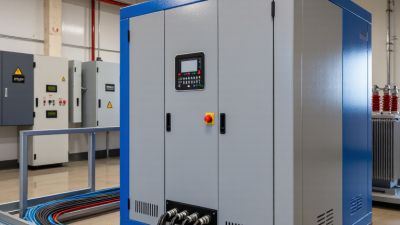
An Industrial 3 Phase Voltage Stabilizer is designed for three-phase equipment and balanced industrial loads. Its capacity is measured in kVA, so selection should match the equipment’s starting current, not only its running load.

Check the incoming voltage range, required output accuracy, response time, cooling method, and overload protection. Bypass functions and digital monitoring also improve maintenance decisions.

In my field experience, many failures begin with an underrated stabilizer. Yet a stabilizer cannot repair poor wiring or an undersized transformer. That assumption deserves review.

Tips:

Record voltage readings during busy and quiet hours. Measure each phase separately with suitable test equipment. Leave practical capacity headroom for future machines.

Confirm the enclosure suits dust, heat, and humidity. Ask a qualified electrical professional to verify grounding, protection settings, and installation conditions.

A quiet cabinet is not proof of correct operation. Inspect alarms and terminal connections regularly. Small loose connections can create large losses.

How to Assess Your Facility’s Voltage Stabilization Requirements

Choosing an Industrial Voltage Regulator in 2026 should begin with your facility’s actual electrical behavior. Do not rely only on the rated supply voltage. Record voltage levels during production, startup, weekends, and peak demand. A motor may draw stable voltage at noon but create a sharp dip during startup.

Review sensitive equipment first. CNC systems, automation controllers, medical instruments, and data servers may tolerate smaller variations than heaters or pumps. Check phase imbalance, frequency stability, harmonic distortion, and load power factor. Your utility bills and protection records can reveal useful patterns. A qualified electrical engineer should verify these findings against local standards and the equipment manufacturers’ limits.

Tips: Install a power-quality logger for at least seven days. Measure normal load, maximum load, and starting current. Include future machinery in your calculation. A 20% capacity margin is often practical, but it is not universal. Ask whether the regulator can handle sudden inrush without excessive output fluctuation. Confirm bypass functions, alarm contacts, cooling needs, and maintenance access. A dusty control room changes the recommendation. So does a hot factory floor.

Do not select capacity from the largest motor alone. Add simultaneous loads, then examine their operating sequence. This step is often missed. A spreadsheet can still mislead if field measurements are poor. Recheck unusual readings before purchasing. The best assessment reflects real conditions, not an idealized equipment list.

How to Choose an Industrial Voltage Stabilizer in 2026?

Assess the facility’s voltage stabilization requirements by identifying the most voltage-sensitive equipment and setting a preliminary planning target. The values below are common engineering screening targets; always confirm the final limits with equipment manufacturers and site measurements.

How to use this chart: Select a stabilizer capable of maintaining the tightest voltage-deviation target required by the most sensitive load. Measure incoming voltage, load current, phase imbalance, transients, and harmonics before sizing the stabilizer. IEC 60038 defines nominal low-voltage systems such as 230 V and 400 V, while actual equipment tolerance depends on the applicable product standard and manufacturer specification.

How to Match Stabilizer Capacity with Electrical Loads

Choosing an Industrial Voltage Stabilizer in 2026 starts with the electrical load, not the cabinet size. A Stabilizer Industrial system must handle normal demand, startup surges, and uneven phase loading. List every motor, heater, inverter, control panel, and sensitive instrument. Record its rated voltage, current, power factor, and starting method. A small clamp meter can reveal real operating current during a production shift.

Convert the loads into kVA before selecting capacity. For three-phase equipment, use kVA = √3 × voltage × current ÷ 1,000. For single-phase equipment, use kVA = voltage × current ÷ 1,000. Add motor inrush separately. A motor drawing 30 A while running may demand several times that current at startup. Do not simply add nameplate kW values. Power factor changes the result. Leave a practical reserve of about 20% to 30% for temperature, aging, and future equipment.

Field conditions matter too. Dust, heat, long cables, and frequent switching can reduce performance. I have seen a correctly calculated stabilizer trip because two compressors started together. The calculation was sound, but the operating sequence was ignored. That mistake changed the required capacity. Measure peak demand with a power analyzer when possible, then confirm voltage range, bypass requirements, and harmonic conditions with a qualified electrical engineer. Sometimes, a smaller unit with controlled starting performs better than an oversized unit.

Which Stabilizer Technology Fits Your Industrial Application?

Choosing an industrial voltage stabilizer starts with load behavior, not rated kVA alone. A packaging line with servo drives may need fast electronic correction and low output impedance. A transformer-heavy workshop may tolerate slower electromechanical control when voltage changes gradually. Measure starting current, crest factor, harmonics, and neutral loading at the panel. Do not trust a quiet afternoon reading. Production peaks reveal more.

Servo-controlled units offer accurate regulation and practical overload handling, but moving parts require inspection. Static stabilizers respond quickly and avoid mechanical wear. They can cost more and demand careful harmonic and cooling design. Ferroresonant designs provide rugged correction and isolation, yet their waveform behavior may not suit sensitive drives. In my site reviews, the wrong choice often came from ignoring bypass conditions. In 2026, remote alarms and trend data also deserve attention.

Check response time against PLC and drive tolerances. Specify continuous and short-term capacity separately. Review thermal derating at the actual installation temperature. Confirm IP rating, earthing, surge protection, alarms, and manual bypass requirements. Verify protection and testing against applicable local electrical standards. Ask for test records under realistic step loads. A laboratory pass is not always a factory pass. I would leave spare capacity, although budgets often resist it. That compromise deserves a written risk decision.

How to Compare Response Time, Accuracy, and Protection Features

Choosing an Industrial Stabilizer in 2026 means comparing behavior, not brochure ratings.

Response time shows how quickly output recovers after a voltage sag. For servo drives, welding lines, and CNC controls, milliseconds matter. Yet a faster unit is not automatically safer. Uptime Institute’s 2024 Annual Outage Analysis linked power issues to 52% of reported impactful outages. The IEA’s Electricity 2024 report expects data-centre electricity demand to more than double by 2026. These figures do not predict every factory. They do justify serious testing.

Check regulation accuracy at full load, half load, and sudden load changes. Ask for test conditions. A claimed ±1% may describe a laboratory, not a dusty production floor. Measure input range, output deviation, waveform distortion, and recovery time with calibrated instruments. IEC 61000-4-30 methods support comparable power-quality records.

Protection should include overvoltage, undervoltage, overload, short-circuit, surge, thermal alarm, and bypass. Bypass continuity deserves attention. A stabilizer that protects equipment but stops the line can still create costly downtime.

Tips: Log plant voltage for seven days before buying. Capture peak loads, motor starts, and night shifts. Compare measured response time with the slowest connected load. Request independent test records, maintenance intervals, and alarm history. I prefer a conservative margin. Still, margins can hide poor sizing. Recheck the calculation with an electrician and the equipment engineer.

How to Evaluate Installation, Maintenance, Efficiency, and Total Cost

How to Choose an Industrial Voltage Stabilizer in 2026?

How to Evaluate Installation, Maintenance, Efficiency, and Total Cost

Choosing an industrial voltage stabilizer requires more than checking its rated capacity. In 2026, production lines need stable power, clear maintenance access, and predictable operating costs. Start by reviewing the facility’s voltage range, load profile, starting currents, and future expansion plans. Ask an electrical engineer to verify cable sizing, grounding, ventilation, and protection settings. A cabinet may fit the room but still restrict airflow. Good installation prevents expensive faults.

Installation quality affects long-term reliability. During site inspections, check whether technicians can reach fans, terminals, filters, and control panels safely. Plan bypass arrangements if continuous production is essential. Maintenance records should show inspection intervals, alarm history, thermal readings, and replaced components. Simple records matter. Ask for realistic service procedures, not perfect promises. I have seen equipment perform well for months, then fail because dust removal was ignored. That weakness is easy to overlook.

Efficiency should be measured under the actual load, not only at the manufacturer’s best condition. Compare standby consumption, voltage regulation accuracy, heat output, and performance during uneven loading. Calculate energy costs across the expected service life. Include installation labor, spare parts, downtime, inspections, and disposal requirements. The cheapest purchase can become the most expensive decision. One figure is never enough. A careful cost model may still contain assumptions, so review it with operations and finance teams before approval.

How to Choose an Industrial Voltage Stabilizer in 2026? - How to Evaluate Installation, Maintenance, Efficiency, and Total Cost
Generic comparison for a three-phase industrial installation. Values are typical engineering ranges for 2026 and should be verified against the actual load profile, utility conditions, harmonic environment, and local installation requirements.
Evaluation Dimension Key Metric Servo-Motor Stabilizer Static Electronic Stabilizer Tap-Changing Stabilizer Ferroresonant Stabilizer Practical Selection Guidance
Voltage Regulation Typical output accuracy Approximately ±1% to ±3% Approximately ±0.5% to ±1% Approximately ±2% to ±5% Approximately ±1% to ±3%
Response Time Typical correction speed About 10–100 ms, depending on voltage deviation and motor design Typically less than 1 ms to a few milliseconds About 20–100 ms, depending on switching logic Typically one-half to one electrical cycle Fast response is important where voltage sags can interrupt drives, PLCs, robotics, or process-control systems.
Installation Complexity Typical installation requirements Floor-mounted cabinet, bypass provision, ventilation, grounding, and upstream/downstream protection Floor- or wall-mounted cabinet, thermal clearances, grounding, bypass, and electromagnetic compatibility checks Cabinet installation, switching clearances, grounding, bypass, and coordination with protective devices Heavy floor-mounted equipment, strong mechanical support, ventilation, grounding, and audible-noise consideration Allow service clearance, cable-bending space, lifting access, and heat dissipation space before approving the installation location.
Typical Installation Labor Share of installed project cost Approximately 15%–30% Approximately 15%–25% Approximately 15%–25% Approximately 20%–35% Labor increases when the unit requires new feeders, bypass switching, harmonic filtering, fire-rated rooms, or difficult lifting access.
Efficiency at Rated Load Typical operating efficiency Approximately 96%–99% Approximately 97%–99.5% Approximately 97%–99.5% Approximately 90%–98%
No-Load and Part-Load Losses Loss behavior below 50% load Usually moderate; motor and control losses remain present Usually low to moderate, depending on semiconductor topology and cooling system Usually low to moderate; transformer core losses remain present Can be relatively high because the magnetic core remains energized continuously Use measured or guaranteed loss curves when the facility normally operates below 50% of rated capacity.
Maintenance Requirement Typical preventive-maintenance activity Inspect brushes, servo motor, moving mechanism, terminals, fans, and calibration; commonly every 6–12 months Inspect fans, filters, terminals, capacitors, sensors, firmware, and thermal condition; commonly every 6–12 months Inspect tap contacts, switching devices, terminals, fans, and control logic; commonly every 6–12 months Inspect cooling, terminals, insulation condition, mounting, and temperature; commonly every 6–12 months Maintenance intervals depend on dust, humidity, switching frequency, ambient temperature, and load criticality.
Wear Components Parts most likely to require replacement Motor, brushes, mechanical drive, relays, and cooling fans Cooling fans, capacitors, sensors, power modules, and control boards Tap switches, contactors or power semiconductors, relays, fans, and control boards Cooling fans, capacitors, insulation components, and control parts Industrial sites with limited maintenance access may favor designs with fewer moving parts.
Overload and Short-Circuit Coordination Protection considerations Requires correctly sized input/output breakers, bypass protection, and overload settings Requires semiconductor-compatible short-circuit protection, bypass coordination, and thermal protection Requires coordination between tap-switching devices, breakers, and bypass equipment Requires transformer inrush and short-circuit coordination with upstream protection Do not select only by kVA. Check inrush current, motor-starting demand, fault level, and nonlinear-load crest factor.
Harmonic and Nonlinear-Load Suitability Compatibility with VFDs, UPS systems, and rectifiers Generally suitable, but input current distortion and heating must be checked Often suitable for fast correction, but semiconductor thermal derating and harmonic compatibility must be verified Suitable for many general loads; switching behavior and harmonics should be evaluated May be unsuitable for high harmonic currents or strongly nonlinear loads without detailed engineering review Request derating data for variable-frequency drives, rectifiers, welding equipment, and high-frequency power supplies.
Noise and Heat Typical operating considerations Moderate fan and motor noise; heat output follows efficiency and load Fan noise and electronic heat dissipation; generally compact Moderate transformer and switching noise; heat output is normally manageable Often heavier and potentially noisier; may produce greater continuous heat loss Verify room temperature, ventilation, acoustic limits, and enclosure IP rating before installation.
Indicative Installed Cost Typical 100 kVA system, excluding major civil work and taxes Approximately USD 8,000–18,000 Approximately USD 15,000–35,000 Approximately USD 7,000–16,000 Approximately USD 10,000–25,000 Actual pricing varies significantly with voltage range, enclosure, bypass, isolation transformer, monitoring, certification, and installation conditions.
Annual Energy-Loss Cost Illustrative cost at 100 kVA, 70% average load, 8,000 operating hours/year, and USD 0.12/kWh Approximately USD 1,000–2,500 per year Approximately USD 700–1,800 per year Approximately USD 700–1,800 per year Approximately USD 1,500–4,500 per year Calculate losses using the real load curve. A small efficiency difference can materially affect a continuously operating facility.
Expected Service Life Typical design-life range with proper maintenance Approximately 10–15 years Approximately 10–15 years Approximately 12–20 years Approximately 15–25 years Service life depends on thermal stress, operating environment, maintenance quality, spare-parts availability, and load cycling.
Total Cost of Ownership Relative 10-year cost profile Medium purchase cost; medium maintenance and energy cost Medium purchase cost; potentially higher energy and cooling costs Use a 10-year model including purchase, installation, energy loss, scheduled maintenance, downtime risk, replacement parts, and disposal.
Best-Fit Applications Typical use cases General manufacturing, machine tools, lighting, pumps, and mixed industrial loads Robotics, CNC systems, process control, medical or laboratory production, and loads requiring rapid correction General industrial distribution, production lines, pumps, compressors, and facilities with moderate voltage variation Legacy control systems, communication equipment, and selected constant-load applications with relatively clean power Select the technology based on voltage-event severity and load sensitivity, not solely on rated capacity.
Overall Suitability Score Weighted score out of 100: installation 20%, maintenance 20%, efficiency 25%, performance 20%, 10-year TCO 15% 78 88 84 68 Scores are indicative decision-support values, not laboratory test results or a substitute for a site-specific engineering assessment.
Calculation basis: The illustrative annual energy-loss estimates assume a 100 kVA unit, 70% average loading, 8,000 operating hours per year, and an electricity price of USD 0.12/kWh. For procurement, request guaranteed efficiency at 25%, 50%, 75%, and 100% load, regulation accuracy, response time, acoustic level, thermal derating, bypass arrangement, protection coordination, warranty terms, and spare-parts availability.

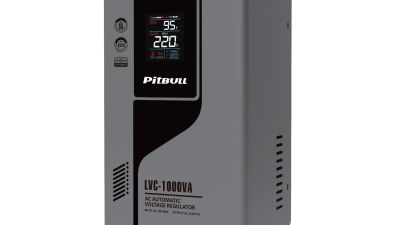
Servo Motor Type Voltage Regulator LVC Series: Features, Applications, and Selection Guide

The Servo Motor Type Voltage Regulator LVC Series is designed for power environments where stable voltage and consistent output are essential. Its servo-controlled correction system continuously detects input fluctuations and adjusts the output with fine accuracy, helping protect connected equipment from under-voltage, over-voltage, and unstable supply conditions. The International Energy Agency’s *Electricity 2024* report projects global electricity demand to grow by approximately 4% in both 2024 and 2025, increasing the importance of dependable power conditioning for homes, businesses, and industrial facilities.

The LVC Series is suitable for residential appliances, production equipment, precision instruments, laboratory systems, and medical devices that require reliable power quality. In industrial settings, stable voltage can support more consistent motor operation and reduce disruptions caused by electrical variation. For sensitive instruments and healthcare applications, selection should also consider response time, output accuracy, waveform quality, insulation, and compliance with applicable electrical and medical safety requirements. Power-quality evaluation can be aligned with measurement principles established in IEC 61000-4-30.

When selecting an LVC regulator, first match the rated capacity to the equipment’s continuous load and starting current, especially for motors, compressors, and other inductive devices. Next, verify the allowable input-voltage range, required output voltage, phase configuration, frequency, installation environment, and bypass or protection functions. A suitable safety margin—commonly 20% to 30% above the calculated operating load—can help accommodate temporary surges and future expansion while maintaining dependable performance.

FAQS

What should I measure before selecting an industrial voltage stabilizer?

Record voltage during production, startup, weekends, and peak demand. A motor can create a sharp dip during startup. Use a power-quality logger for seven days. Measure normal load, maximum load, starting current, phase imbalance, frequency, harmonics, and power factor.

Which equipment needs the closest voltage control?

CNC systems, automation controllers, medical instruments, and data servers often need tighter control. Heaters and pumps may tolerate wider variation. Check every equipment manual. Do not assume all machines share the same limits.

How should I calculate the required capacity?

Add simultaneous loads, not only the largest motor. Review the operating sequence. Include future machinery and starting currents. A 20% margin may help, but it is not universal. A spreadsheet cannot repair poor field measurements.

How important is response time?

Response time matters during sudden voltage sags. Servo drives, welding lines, and CNC controls may react within milliseconds. Compare recovery time with the slowest connected load. Test sudden load changes, not only steady operation. Faster is not always safer.

How can I verify claimed regulation accuracy?

Ask for test conditions and independent records. Check performance at half load, full load, and sudden changes. Measure input range, output deviation, waveform distortion, and recovery time. A claimed accuracy figure may reflect laboratory conditions.

Which protection features should I compare?

Look for overvoltage, undervoltage, overload, short-circuit, surge, and thermal alarms. Confirm bypass operation and alarm contacts. Protection should not unexpectedly stop the production line. This part is easy to overlook.

Why does the installation environment affect the choice?

Dusty control rooms restrict cooling and maintenance access. Hot factory floors can increase thermal stress. Confirm ventilation, cooling needs, clearances, and service access. A clean test room is not your factory.

How should I validate the final recommendation?

Compare logger data with utility bills and protection records. Recheck unusual readings before purchasing. Ask an electrician and an equipment engineer to review the calculation. The choice should reflect real operating conditions. Not always neatly.

Conclusion

Choosing the right Industrial Voltage Stabilizer in 2026 requires a clear understanding of your facility’s electrical environment, equipment sensitivity, and future power demands. Begin by identifying voltage fluctuations, load types, operating conditions, and the consequences of unstable power. Then calculate the total connected load, starting current, peak demand, and desired reserve capacity to ensure the stabilizer can operate reliably without overload.

Different applications may require servo-controlled, static, or other stabilization technologies, depending on required accuracy, response speed, maintenance expectations, and load characteristics. Compare each option by voltage regulation performance, response time, overload protection, surge protection, bypass functions, cooling method, and monitoring capabilities. Installation space, ventilation, service access, energy efficiency, expected lifespan, and total ownership cost should also be evaluated. A well-selected stabilizer not only protects industrial equipment but also improves operational continuity, reduces power-related downtime, and supports safer, more efficient facility management.
Ethan

Ethan

Ethan is a dedicated marketing professional with a deep understanding of the technology sector, particularly in the realm of voltage regulators and intelligent power solutions. With over a decade of experience, he is passionate about highlighting the innovative products designed and manufactured by......
Previous Top 10 Smart Voltage Stabilizer Suppliers Worldwide