Leave Your Message
0%

Choosing the right Three Phase Voltage Stabilizer starts with the load, not the catalogue cover. A factory may show 400 volts at the panel, yet measure 365 volts during motor startup. That short dip can overheat contactors, interrupt PLCs, and damage sensitive drives. The U.S. Department of Energy reports that motor-driven systems consume more than 70% of industrial electricity in the United States. Their starting current makes voltage regulation a practical reliability issue, not a decorative upgrade.

Power-quality engineer Roger C. Dugan defines a voltage sag as “a decrease in RMS voltage magnitude to a value between 0.1 and 0.9 per unit.” This definition, referenced in power-quality engineering literature and IEEE 1159 practice, explains why ordinary voltage readings can miss real problems. IEC 61000-4-30 also emphasizes consistent measurement methods. Therefore, buyers should check input range, correction speed, response time, rated kVA, overload capacity, and phase-balance performance. Numbers need context.

Look beyond marketing claims.

A stabilizer cannot repair every electrical fault. It will not automatically remove harmonics, poor grounding, or an undersized transformer. A site survey should record phase voltage, current, load type, startup events, and ambient temperature for several operating cycles. Schneider Electric and Eaton both stress the importance of matching protection equipment to actual power-quality conditions. That advice is sound, though no selection is perfect. A practical choice balances measured risk, maintenance access, efficiency, noise, and budget. The best model is the one that remains stable when the factory is busiest, not merely when the test room is quiet.
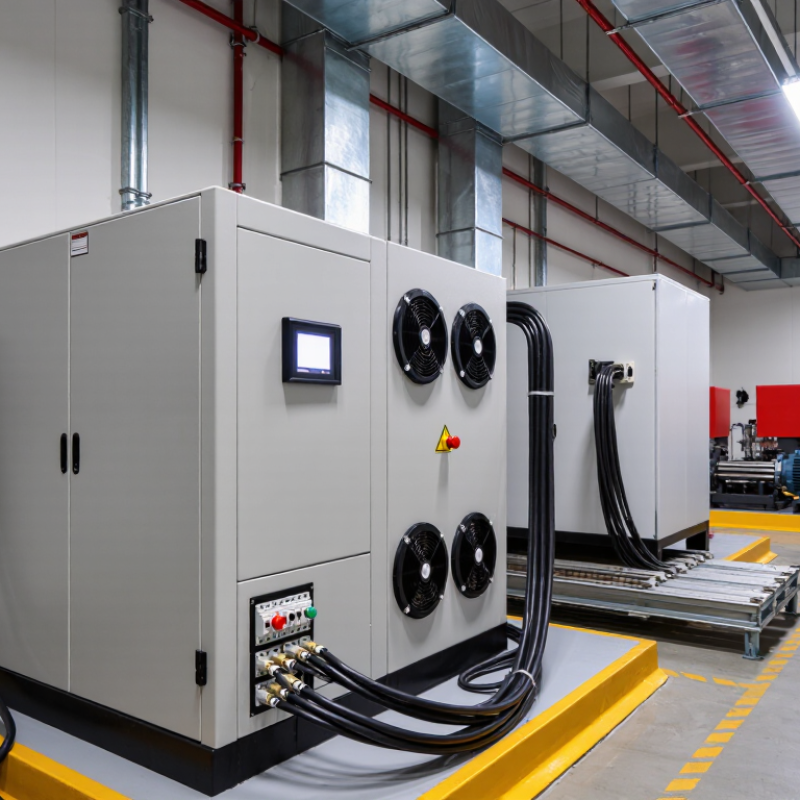
How to Choose the Best China Three Phase Voltage Stabilizer?

Define the Load: kVA, Phase Balance, Power Factor, and Starting Current

How to Choose the Best China Three Phase Voltage Stabilizer?

Define the load before comparing any China three phase voltage stabilizer. Measure actual consumption during normal operation, not only the motor nameplate. A 45 kW machine with a 0.8 power factor requires about 56 kVA. Use the formula: kVA equals kW divided by power factor. Keep practical headroom, usually 20–30 percent, for aging equipment and future expansion. Measure the load.

Phase balance also deserves close attention. On a three phase system, uneven current can create overheating, voltage fluctuation, and nuisance trips. Record each phase with a clamp meter while production is running. A difference of only a few percent may matter in sensitive equipment. The target should follow local electrical standards and the equipment manufacturer’s limits. Do not assume the phases are balanced.

Starting current is easy to underestimate. Motors, compressors, pumps, and welding equipment may draw five to seven times their running current for a short period. Select a stabilizer by checking measured inrush current, not by multiplying kW casually. A slow response or undersized unit can drop voltage when a motor starts. That mistake is expensive. I would also verify the stated power factor, waveform requirements, bypass arrangement, and overload protection with a qualified electrical engineer. Specifications can look complete while missing the hardest operating condition.

Match China’s 380/400/415 V, 50/60 Hz Supply to IEC 60038

Choosing a China Three Phase Voltage Stabilizer starts with the actual site supply, not a catalogue label. China commonly uses 380 V or 400 V, 50 Hz, while some facilities require 415 V or 60 Hz. IEC 60038 provides useful reference values, but it does not replace on-site measurement. Record line-to-line voltage, line-to-neutral voltage, frequency, phase sequence, and neutral stability during busy and quiet periods.

A Three Phase Servo Controlled Voltage Stabilizer can correct unstable voltage through motor-driven adjustment. Select an output matching the equipment rating, such as 380, 400, or 415 V. Confirm whether the load needs a three-phase three-wire or four-wire connection.

Motor starting current, welding equipment, and uneven phase loads can exceed the apparent kVA rating. Leave practical capacity margin. A small mistake here becomes expensive.

Tips: Measure for several working days. Check voltage at startup. Ask for the real frequency range. Review IEC 60038 values with a qualified electrical engineer, especially for imported machinery. Verify response time, bypass operation, overvoltage protection, undervoltage protection, and thermal limits. Do not assume a 415 V machine will perform correctly on 380 V. It may run, but heating and torque can change. Also, frequency is not corrected by every stabilizer, so confirm whether a separate frequency converter is necessary. Test the complete installation under its heaviest expected load before regular operation.

Compare Servo, Static, and Relay-Based Stabilizer Technologies

How to Choose the Best China Three Phase Voltage Stabilizer?

Choosing a Three Phase Voltage Regulator starts with measuring real site conditions. Record voltage at different hours, not only during commissioning. In workshops, I have seen readings change sharply when compressors start. A servo stabilizer uses a motor-driven mechanism to correct voltage smoothly. It suits broad voltage variation and demanding industrial loads. However, correction takes time, and brushes or moving parts need inspection. Dust can make that problem worse.

Static stabilizers use power electronics and respond within milliseconds. They work well for CNC controls, medical equipment, and automation systems that dislike voltage dips. There are no moving parts. Still, installers must check heat dissipation, harmonic performance, and short-circuit protection. A relay-based stabilizer changes voltage through fixed steps. It is usually simpler and more economical. The output, however, may fluctuate slightly between steps. Relay contacts can also wear after frequent switching.

Compare the technologies against load sensitivity, correction speed, capacity, and maintenance access. Check whether the unit supports independent phase control or only overall three-phase correction. This detail matters when one phase carries heavy motors. Confirm the rated kVA, input range, overload capacity, neutral arrangement, and bypass design. Leave practical space around the cabinet. I have underestimated ventilation before, and the resulting temperature rise was avoidable. A factory with unstable supply may need monitoring data before selecting the final technology. Specification sheets help, but measured voltage records are more trustworthy.

Set Regulation Targets: ±1% Precision Versus ±3% Industrial Control

How to Choose the Best China Three Phase Voltage Stabilizer?

Set Regulation Targets: ±1% Precision Versus ±3% Industrial Control

The right regulation target depends on the load, not the product label. A Three Phase Ac Voltage Regulator set at ±1% suits laboratory instruments, medical equipment, and sensitive automation. Small voltage changes can affect measurement accuracy or control signals. However, this precision may increase cost, heat, and response complexity.

For pumps, fans, heaters, and general factory machinery, ±3% control is often practical. Motors usually tolerate wider voltage movement, while excessive correction may create unnecessary switching. EN 50160 reports that 95% of 10-minute RMS supply-voltage values should remain within ±10% of the declared voltage during normal conditions. That range is much wider than either target, so site measurements remain essential.

Check voltage at the equipment terminals during starting, peak production, and low-load periods. Record imbalance, harmonics, and neutral conditions. IEEE 519-2022 reminds engineers to evaluate power quality at the point of common coupling, not only inside the stabilizer. A stable display can hide distorted current.

A common mistake is choosing ±1% because it sounds safer. It may not be. Set ±3% for robust industrial loads, then tighten the target when documented sensitivity justifies it. Leave operating margin for temperature, cable drop, and sudden motor starts. Real sites are rarely perfect.

How to Choose the Best China Three Phase Voltage Stabilizer?

Set Regulation Targets: ±1% Precision Versus ±3% Industrial Control

Based on a nominal three-phase line-to-line voltage of 400 V, a ±1% regulation target permits only a 4 V deviation, maintaining output between 396 V and 404 V. A ±3% industrial target permits a 12 V deviation, with an acceptable range of 388 V to 412 V. Choose tighter regulation for sensitive automation, control electronics, and precision equipment; the wider range is commonly suitable for general industrial loads.

Size Capacity with 20–30% Headroom and Motor Inrush Allowance

Choosing a China Three Phase Voltage Stabilizer starts with the real load, not the nameplate alone. During site surveys, I measure running current on each phase during normal production. I also record the largest motor, compressor, or pump. Small details matter. A cold motor can draw five to seven times its running current for several seconds. A stabilizer sized only for steady demand may trip, sag, or overheat during startup.

Calculate apparent power with this formula: kVA = √3 × line voltage × current ÷ 1,000. Use the highest measured phase current, and check phase imbalance before selecting capacity. Then add 20–30% headroom above the calculated continuous load. This margin covers future equipment, voltage variation, heat, and imperfect measurements. For example, a 60 kVA operating load usually deserves a 72–78 kVA unit. If a 30 kW motor starts directly online, the required allowance may be larger. Review its starting method, locked-rotor current, and restart frequency. Soft starters reduce stress, but they do not remove it.

For a Three Phase Automatic Voltage Regulator, request documented overload curves, response time, bypass arrangements, and thermal limits. A qualified electrician should verify cable size, breaker settings, grounding, and ventilation. Do not trust one afternoon of readings. Production peaks may arrive at night. I once underestimated a compressor because testing was done unloaded. The selection looked correct, but startup faults appeared later. That mistake changed my practice: test realistic conditions and confirm calculations with equipment data. Maybe 20% is enough. Maybe it is not.

Verify Efficiency, Response Time, THD, and 95–99% Performance Claims

Choosing the best China three phase voltage stabilizer begins with evidence, not attractive specifications. During field evaluations, I check efficiency across 25%, 50%, 75%, and 100% loads. A unit showing 99% efficiency at full load may perform differently during light operation. Request test data that includes input voltage, power factor, ambient temperature, and load type. These details often reveal optimistic testing.

Response time also needs precise definition. Ask whether the figure means milliseconds, one voltage cycle, or a complete correction period. Sudden voltage changes should be tested with an oscilloscope, not estimated from a display. A fast response can still create harmful overshoot. Check total harmonic distortion before and after stabilization. Request THD readings under unbalanced loads and changing phase conditions. Test every phase.

The 95–99% performance claim needs context. It may describe peak efficiency, not continuous site performance. Ask for independent laboratory reports, calibration records, and test conditions. I once treated a headline efficiency number as sufficient evidence. That was a useful mistake. Cable losses, poor ventilation, and uneven loading changed the result. Leave room for measurement error. A reliable supplier should explain these limits clearly and provide data that matches your facility’s actual voltage range and operating pattern.

Audit Safety, Certification, IP Rating, Warranty, and Factory Testing

How to Choose the Best China Three Phase Voltage Stabilizer?

A reliable stabilizer should survive an audit, not only look impressive in a quotation. Request a safety risk assessment covering insulation, grounding, overload protection, emergency shutdown, and cabinet wiring. During factory visits, inspect cable terminals and protective covers directly. Small details matter. Certification documents should match the exact model, input range, and rated capacity. Check the issuing body and test date, rather than accepting a copied certificate.

The IP rating must suit the installation site. An indoor electrical room may require IP20, while dusty workshops or damp areas need stronger protection. Ask how the enclosure handles ventilation, condensation, and cleaning. IP protection does not replace proper installation. This is often misunderstood. Warranty terms deserve the same attention as technical data. Confirm coverage length, excluded components, response time, replacement procedures, and availability of service engineers. A long warranty can still be weak if shipping responsibilities remain unclear.

Factory testing should include voltage regulation, phase balance, response time, temperature rise, insulation resistance, and overload performance. Request signed test records for the actual unit, not only a sample report. A realistic test should use changing loads, including motors or other equipment with starting current. I once considered test numbers sufficient, but the test conditions were missing. That was a poor assumption. Ask whether final inspection includes alarm functions, bypass operation, terminal torque, and serial-number traceability before shipment.

How to Choose the Best China Three Phase Voltage Stabilizer? - Audit Safety, Certification, IP Rating, Warranty, and Factory Testing

Evaluation Dimension What to Verify Recommended Evidence Practical Benchmark Warning Signs
Electrical Safety Design Check enclosure grounding, protective devices, insulation, creepage and clearance distances, bypass arrangements, and protection against overvoltage, undervoltage, overload, and short circuit. Electrical schematic, protection-device list, insulation-resistance records, grounding test results, and a sample internal inspection report. The design should include a clearly identified protective earth terminal, accessible circuit protection, safe isolation, and documented test points. No wiring diagram, undersized terminals, exposed live parts, missing earth connection, or protection devices that cannot be identified.
Input and Output Configuration Confirm three-phase system type, rated voltage, frequency, neutral requirements, allowable input range, output accuracy, phase balance, and load capacity. Technical datasheet, nameplate photographs, wiring diagram, and a test report showing phase-to-phase and phase-to-neutral measurements where applicable. The specification should state nominal voltage, frequency, input tolerance, output tolerance, rated kVA or kW, and operating temperature conditions. Only a single voltage value is listed, phase requirements are unclear, or output accuracy is quoted without test conditions or load level.
Applicable Certification Determine which approvals are legally required in the destination market. Requirements may differ for China, the European Economic Area, the United Kingdom, North America, and other regions. Certificate number, certificate scope, issuing body, validity status, applicable model range, and a matching product label. Verify the certificate independently with the issuing organization where possible. For China-market products, verify whether China Compulsory Certification applies to the exact product category. For export markets, confirm the required conformity assessment route rather than relying on a generic logo. A certificate belongs to another model, the certificate scope is unrelated, the certificate has expired, or only an unverified logo is provided.
Standards and Technical Compliance Review the standards used for electrical safety, low-voltage assemblies, electromagnetic compatibility, environmental protection, and power quality. A standards-compliance matrix identifying the edition, test method, product scope, and applicable clauses for each claimed standard. The supplier should explain why each standard applies. IEC 60529 may be relevant to the enclosure IP rating, while other standards depend on the equipment design and intended installation. A list of standards is shown without test reports, edition dates, product scope, or a clear connection to the offered configuration.
IP Rating Select the enclosure protection level according to dust, water, cleaning, and installation conditions. An IP rating does not indicate corrosion resistance, impact strength, or electrical performance. IP test report or certificate based on IEC 60529, with the tested enclosure configuration, test date, rating, and limitations clearly stated. Use a rating suitable for the actual environment. A higher IP rating may reduce ventilation and increase heat accumulation, so thermal design must also be checked. The IP value is advertised without a test report, ventilation openings are ignored, or the tested enclosure differs from the supplied product.
Factory Quality Audit Assess incoming-material control, traceability, calibration, process inspection, nonconforming-product control, change management, and final inspection. Quality manual, process flow chart, internal-audit records, calibration certificates, inspection plans, corrective-action records, and controlled production samples. The factory should be able to trace major components and test results from a finished unit back to production and inspection records. No serial-number traceability, expired calibration, undocumented design changes, or refusal to provide reasonable audit evidence.
Factory Testing Before Shipment Confirm routine tests for insulation resistance, dielectric strength, grounding continuity, voltage regulation, phase balance, load response, temperature rise, alarms, and protection functions. Signed factory acceptance test report containing serial number, test instruments, calibration status, test conditions, measured values, acceptance criteria, and inspector approval. Testing should cover every finished unit, not only a prototype or one unit per production batch, unless a documented sampling plan is contractually accepted. Only a blank template is provided, measured values are identical across units, or testing is limited to visual inspection.
Heat Dissipation and Operating Environment Review ambient temperature, humidity, altitude, ventilation clearance, cooling method, noise level, derating, and installation orientation. Environmental specification, thermal calculation or test results, cooling-fan data where applicable, and installation manual. Rated capacity should be stated together with ambient temperature and altitude limits. Derating requirements should be explicit for high-temperature or high-altitude sites. The unit is rated only under ideal conditions, ventilation requirements are omitted, or the enclosure becomes excessively hot during testing.
Warranty and Service Terms Check warranty duration, starting date, covered components, response time, spare-parts policy, remote support, repair responsibility, and exclusions. Signed warranty document, service procedure, replacement-parts list, escalation contacts, and clearly defined responsibilities for installation and commissioning. A practical warranty should define the coverage period, claim evidence, response time, repair or replacement process, and availability of critical spare parts. Warranty terms are only verbal, all failures are excluded, spare parts are unavailable, or the supplier provides no documented service route.
Documentation and Installation Verify that manuals cover lifting, storage, wiring, grounding, ventilation, commissioning, alarms, maintenance, troubleshooting, and safe isolation. Controlled installation and maintenance manual, wiring diagram, terminal schedule, spare-parts list, and commissioning checklist in the required language. Documents should match the exact model, rated configuration, control panel, terminal arrangement, and firmware or controller version supplied. Generic manuals, inconsistent terminal labels, missing safety warnings, or documents that do not match the nameplate.
Pre-Shipment and Site Acceptance Define inspection points before shipment and after installation, including appearance, dimensions, wiring, insulation, output voltage, protection functions, and operating performance. Approved inspection and test plan, photographic records, signed acceptance report, punch-list process, and criteria for rejecting nonconforming equipment. Use objective acceptance limits and require corrective action before shipment for safety-critical or performance-related deviations. Acceptance is based only on appearance, no test limits are stated, or the buyer cannot review test records before shipment.

FAQS

Why should I measure the actual load before choosing a stabilizer?

Equipment nameplates may not show real consumption. Measure current during normal production. A 45 kW machine at 0.8 power factor needs about 56 kVA.

How much capacity headroom should a stabilizer have?

Add about 20–30% above the continuous load. This margin covers aging equipment, heat, measurement errors, and future expansion. The correct margin may vary.

How do I calculate three-phase apparent power?

Use this formula: kVA = √3 × line voltage × current ÷ 1,000. Use the highest measured phase current.

Why is phase balance important?

Uneven phase current can cause overheating, voltage fluctuation, and unwanted trips. Check each phase with a clamp meter during active production.

How should I account for motor starting current?

Motors, pumps, and compressors may draw five to seven times their running current. Check measured inrush current and starting methods. Do not estimate casually.

What is the difference between servo and static stabilizers?

Servo units correct voltage smoothly and suit wide voltage variation. Static units respond within milliseconds and suit sensitive controls. Each has different maintenance needs.

When might a relay-based stabilizer be suitable?

Relay units are usually simpler and more economical. They adjust voltage in fixed steps. Output may fluctuate slightly, and relay contacts can wear.

Should I choose independent phase control?

It depends on the site. Independent control helps when one phase carries heavier motors. Overall three-phase correction may be insufficient in uneven systems.

What technical details should I verify before purchase?

Check rated kVA, input range, overload capacity, response time, neutral arrangement, bypass design, heat limits, and short-circuit protection.

Why are site records more useful than specification sheets alone?

Voltage can change when compressors or other large loads start. Record readings at different hours. One afternoon test can be misleading.

What installation conditions affect stabilizer performance?

Provide cable capacity, suitable breakers, grounding, ventilation, and maintenance access. Dust and poor airflow can raise cabinet temperature quickly. Small oversight, expensive result.

Should a qualified electrician review the final selection?

Yes. An electrician should confirm calculations, cable sizes, protection settings, grounding, and starting conditions. The specification may still miss the hardest operating moment.

Conclusion

Choosing the best Three Phase Voltage Stabilizer begins with a clear understanding of the load. Calculate the required kVA, check phase balance and power factor, and account for motor starting current or other inrush demands. Confirm that the stabilizer matches the available 380/400/415 V, 50/60 Hz supply and aligns with IEC 60038 requirements. Then compare servo, static, and relay-based technologies according to the application, response needs, and operating environment. Set a suitable regulation target: ±1% for sensitive equipment or approximately ±3% for general industrial control.

Correct sizing is equally important. Select a capacity with 20–30% spare headroom, while allowing additional margin for motor inrush. Before purchase, verify efficiency, response time, total harmonic distortion, and whether stated 95–99% performance figures are supported by test data. Finally, review protection features, safety certification, IP rating, warranty terms, and factory testing records. A well-selected stabilizer should provide dependable voltage control, efficient operation, and long-term protection for the entire three-phase system.
Sophia

Sophia

Sophia is a seasoned marketing professional with over a decade of experience in the technology manufacturing sector. Her expertise lies in the intricacies of voltage regulators and intelligent power solutions, an area where she has cultivated a deep understanding of both product functionality and......
Previous What Is a Digital Voltage Regulator and How Does It Work?