Leave Your Message
0%

When it comes to global sourcing, things don’t usually go wrong just because a transformer looks okay on paper. Nope, the real trouble starts when folks don’t fully understand the voltage conditions, how loads change over time, or what’s really happening during installation. A Stabilizer Transformer can be a life-saver for sensitive equipment, especially in dealing with power fluctuations. But, here’s the catch — if its specs don’t match what’s actually needed at the site, it’s not going to do its job properly. In real-world setups, you’ll notice voltage swings happening during welding, motor starts, or those busy evening production rushes. And trust me, that’s when weak specifications are exposed pretty quickly. It’s the little details that really count.

Good sourcing starts with actual data, not just relying on what’s promised in a catalog. Engineers need to double-check everything — from input ranges and output tolerances to phase setups, frequency, efficiency, cooling, noise levels, and short-circuit safeguards. They also need to confirm insulation ratings, enclosure ratings, testing procedures, and whether parts can be easily replaced down the line. The supplier’s records matter a lot too. Factory acceptance tests, traceable serial numbers, and proper documentation help build trust internationally. Having an independent inspector take a look can catch issues like loose terminals, bad labels, or damage during transport before the unit even leaves the factory. But let’s be clear — inspections alone aren’t enough if the design itself isn’t right from the start.

Picking the right Stabilizer Transformer isn’t just about specs; it’s also about coordinating well with manufacturers, freight companies, electricians, and local service providers. Sometimes, a unit that’s sized for average demand can overheat if the load suddenly jumps. That’s a pretty common mistake. On the flip side, oversizing the transformer can mean extra costs and inefficiency when the plant’s running light. The smart move? Find a balance — consider current needs, expected growth, the environment, and how easy it is to maintain. And don’t forget — it’s better to think about the total ownership costs, not just the initial price. No supplier can promise a 100% risk-free deal, but keeping detailed records, communicating openly, and planning a realistic setup can really reduce surprises. This way, you’re making smarter decisions, ensuring safer procurement, and actually getting a more reliable transformer in the long run. Before hitting that ‘order’ button, take a moment to question those assumptions — it’s worth it.
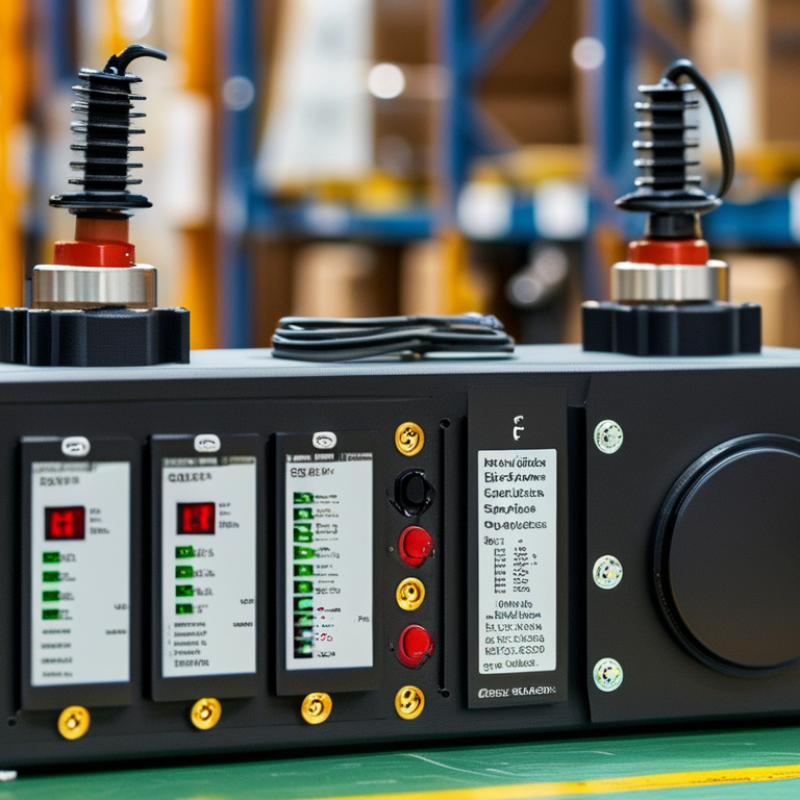
Why Choose a Stabilizer Transformer for Global Sourcing?

What a Stabilizer Transformer Is and How It Regulates Voltage

A stabilizer transformer keeps voltage within a safer operating range when supply conditions fluctuate. It measures incoming voltage continuously, compares it with the target, and corrects the difference. A Servo Stabilizer Transformer uses a motor-driven variable transformer and feedback controller. The motor adjusts the brush position, while a buck-boost transformer raises or lowers the output voltage. The process is automatic.

Small deviations matter. A 230-volt supply dropping to 190 volts can increase motor current and heat. Sensitive control boards may also reset during repeated surges. The IEA Electricity 2024 report forecasts more than 2,500 TWh of additional global electricity demand between 2024 and 2026. More demand can intensify local grid variation, especially near industrial expansion zones. IEC 60038 also recognizes different nominal voltage systems worldwide, so sourced equipment must match the destination grid.

For global sourcing, specify input range, output tolerance, frequency, phase configuration, response time, and overload capacity. Ask for factory test records and site commissioning measurements. In practice, technicians should check grounding, cable size, and load imbalance before installation. A stabilizer cannot repair poor wiring. It may even hide the problem temporarily. Oil-cooled units suit heavy industrial loads, while air-cooled units can simplify indoor maintenance. Selecting the wrong capacity remains an expensive mistake.

Why Stable Voltage Matters in International Equipment Sourcing

Why Choose a Stabilizer Transformer for Global Sourcing?

Why Stable Voltage Matters in International Equipment Sourcing

International equipment sourcing is not only a price exercise. A machine tested at 400 V may face 360–440 V at its destination. Motors run hotter, control boards reset, and sensors lose reference. IEEE Std 1159-2019 classifies a voltage sag as 0.1–0.9 per unit, lasting from 0.5 cycle to one minute. Short events can still interrupt production. A Lawrence Berkeley National Laboratory study estimated that U.S. power interruptions cost customers between 28 and 169 billion dollars annually. This is not a sourcing forecast. It is a serious warning.

A Voltage Regulator Transformer can correct fluctuating input and provide steadier output for imported equipment. Its value depends on engineering, not a label. Check rated voltage, tolerance, phase, frequency, starting current, and total VA demand. A 50 Hz motor may behave differently on a 60 Hz supply, even with stable voltage. Transformer impedance and harmonics also matter. A stabilizer cannot repair undersized wiring or poor grounding. That assumption is common—and wrong. Request voltage measurements across a full operating day, including startup and peak-load periods.

Tips: Compare power-quality records with the equipment manual and IEC 60038 requirements. Specify overvoltage, undervoltage, surge, bypass, and thermal protection. Leave headroom above calculated VA demand. Keep the wording precise. Factory test results and site verification are worth requesting. Skipping them saves money briefly. It may create a larger delay later.

Why Choose a Stabilizer Transformer for Global Sourcing? - Why Stable Voltage Matters in International Equipment Sourcing

Sourcing and Voltage Dimension Typical Condition or Reference Data Potential Equipment Risk How a Stabilizer Transformer Helps Recommended Sourcing Check
Nominal supply voltage Common low-voltage systems include approximately 100–127 V or 220–240 V, depending on the destination market. Incorrect voltage can cause overheating, malfunction, insulation stress, or immediate equipment failure. Matches the incoming supply to the equipment’s required output voltage while providing voltage regulation. Confirm input voltage, output voltage, frequency, phase, plug configuration, and applicable electrical codes before purchase.
Voltage fluctuation Commercial and industrial sites may experience temporary under-voltage or over-voltage caused by load changes, long cable runs, or weak distribution networks. Motors may draw higher current during low voltage; control systems and power supplies may trip or reset. Corrects specified input variation and maintains a more consistent output for connected loads. Request the stabilizer’s input operating range, output accuracy, correction speed, and test conditions.
Frequency compatibility Power systems commonly operate at 50 Hz or 60 Hz; some equipment accepts both, while other equipment does not. Frequency mismatch can affect motor speed, transformer losses, timing functions, and equipment protection. A stabilizer transformer can regulate voltage, but it does not automatically convert line frequency. Verify frequency separately. Specify a frequency converter when the equipment and local supply are incompatible.
Single-phase or three-phase supply Small equipment is often single-phase; higher-power industrial machinery commonly uses three-phase power. The wrong phase arrangement can prevent startup, create imbalance, or damage power components. Provides a transformer configuration designed for the required phase system and load connection. Check phase count, line-to-line voltage, line-to-neutral voltage, neutral requirements, and phase-sequence needs.
Capacity and load type Transformer capacity is normally specified in volt-amperes or kilovolt-amperes. Motors, compressors, and welders have high starting currents. Undersizing may cause excessive heating, nuisance trips, poor voltage regulation, and reduced service life. Supports the required continuous load and, when properly selected, accommodates short-duration inrush demand. Calculate running load and starting load. Include future expansion and follow the manufacturer’s derating guidance.
Sensitive electronics Computers, laboratory instruments, automation controls, medical devices, and communication equipment can have narrow voltage tolerances. Unexpected shutdowns, data loss, calibration errors, and shortened component life may occur. Reduces the effect of sustained voltage variation and may provide isolation, depending on the transformer design. Confirm required output tolerance, response time, waveform requirements, grounding method, and whether surge protection or UPS backup is also needed.
Power quality and electrical noise Variable-speed drives, switching power supplies, and nearby heavy loads can introduce harmonics or electrical interference. Control errors, communication interruptions, extra heating, and interference with measurement systems may result. An isolation transformer may reduce some common-mode disturbances, but standard voltage regulation does not remove all harmonics. Request power-quality test data and evaluate harmonic filters, shielding, grounding, or isolation requirements separately.
Protection and safety International installations may be subject to different rules for overcurrent protection, earthing, enclosure ratings, and electrical clearances. Improper protection can create shock, fire, equipment-damage, or compliance risks. Can be specified with overload, over-temperature, short-circuit, and abnormal-voltage protection where appropriate. Obtain wiring diagrams, protection settings, enclosure details, grounding instructions, and documentation for the destination market.
Environmental conditions Temperature, humidity, altitude, dust, vibration, and ventilation can differ significantly between sourcing and installation locations. Reduced cooling, insulation degradation, corrosion, and premature failure may occur. Allows the voltage-control system to be selected with suitable thermal rating, enclosure, insulation, and cooling method. Provide the installation altitude, ambient temperature range, humidity, indoor or outdoor location, and ventilation conditions.
Global logistics and installation Large transformers may require special packing, lifting points, transport protection, and on-site commissioning. Transit damage, incorrect wiring, delayed installation, or unavailable replacement parts can increase total cost. A correctly documented unit simplifies installation and reduces the risk of voltage mismatch after delivery. Review dimensional drawings, shipping weight, terminal markings, spare parts, manuals, inspection records, and commissioning requirements.

Technical values and examples are general sourcing references. Final specifications should be confirmed from the equipment nameplate, local electrical regulations, installation measurements, and a qualified electrical professional.

Key Transformer Types for Different Global Power Conditions

Why Choose a Stabilizer Transformer for Global Sourcing?

Global equipment faces more than different plug shapes. Voltage fluctuation, frequency variation, phase imbalance, and weak grids can damage sensitive loads. The IEA Electricity 2024 report forecasts global electricity demand growth of about 4% annually through 2026. Much of this growth comes from emerging economies, where supply quality may vary between industrial zones and rural sites.

Key Transformer Types for Different Global Power Conditions

A buck-boost transformer suits systems with stable frequency but persistent overvoltage or undervoltage. It is compact and practical for correcting moderate deviations. An automatic voltage stabilizer works better where voltage changes repeatedly during production. Servo-controlled designs respond steadily, while electronic designs react faster to sudden changes. The choice depends on motor starting current, correction speed, and maintenance skills.

For imported machinery, an isolation transformer can separate the load from electrical noise and reduce shock risks. Three-phase stabilizer transformers fit factories with large motors, compressors, or uneven phase loads. Dry-type units are useful indoors because they avoid insulating oil. Oil-immersed units may suit outdoor substations and higher capacities, but installation requires careful fire and environmental planning. IEC 60076 provides the main international framework for power transformer testing and performance.

A catalog rating is never enough. Field measurements should record voltage at different hours, not only at noon. I would also check frequency, harmonics, ambient temperature, and inrush current. One weak assumption remains common: selecting by wattage alone. That can fail when motors start. The most reliable specification combines local measurements, IEC-based testing, protection settings, and a realistic service plan.

Why Choose a Stabilizer Transformer for Global Sourcing?

Key transformer types for different global power conditions

The chart compares typical nominal low-voltage supplies used in major sourcing markets. Actual service voltage can vary by country, region, installation, and local utility requirements.

Step-up transformer
Suitable when equipment requires a higher voltage than the local supply, such as 100–120 V input converted to approximately 220–240 V.
Step-down transformer
Suitable when 220–240 V equipment must operate on a 100–120 V supply.
Automatic voltage stabilizer
Recommended where utility voltage fluctuates significantly and the equipment needs a controlled output voltage.
Isolation transformer
Used for galvanic isolation and noise reduction; it does not automatically correct voltage or frequency differences.

Frequency must also be checked separately: common public supplies are 50 Hz or 60 Hz, while Japan uses both 50 Hz and 60 Hz depending on the region. A transformer changes voltage, not frequency.

How to Evaluate Capacity, Efficiency, and Protection Features

Why Choose a Stabilizer Transformer for Global Sourcing?

Global sourcing often means handling unstable grids, different voltages, and uncertain installation conditions. A stabilizer transformer can regulate incoming voltage before it reaches sensitive equipment. Capacity evaluation should begin with the real load, not the nameplate total. List motors, heaters, control systems, and startup currents separately. A motor may briefly demand several times its running current. That moment matters.

Leave practical headroom. Around 20% to 30% spare capacity is often useful, but the correct margin depends on the load profile. Oversizing also deserves caution. A lightly loaded transformer may operate inefficiently and cost more to transport. In factory assessments, I check peak demand, daily operating hours, ambient temperature, and future expansion. A perfect spreadsheet does not exist. Measurements are better than assumptions.

Efficiency should be checked across expected load ranges, not only at full capacity. Ask for no-load losses, load losses, temperature rise, and tested performance data. Protection features should include overload protection, short-circuit response, surge control, thermal monitoring, and suitable grounding provisions. Audible alarms and clear status indicators can reduce troubleshooting time. For international procurement, confirm frequency compatibility, enclosure rating, cable terminals, documentation, and local service capability. These details are easy to overlook. They can delay commissioning. During technical review, I also verify whether the protection settings match the equipment’s actual tolerance, because excessive sensitivity may cause nuisance trips while weak settings may leave expensive systems exposed.

International Standards, Certifications, and Safety Requirements

Global sourcing of a stabilizer transformer requires more than comparing voltage ranges and prices. The Transformer Avr Voltage Regulator should match the destination country’s electrical system, frequency, and installation conditions. IEC 60076 may apply to power transformers, while IEC 61558 can be relevant to certain safety transformer designs. The correct standard depends on construction and intended use.

Request current test reports, not only a certificate image. Inspectors should verify dielectric strength, insulation resistance, temperature rise, grounding continuity, and overload protection. Clearances and creepage distances deserve close attention, especially in humid factories or dusty workshops. EMC performance may also matter when the regulator supplies computers, sensors, or production controls. Certification marks, such as CE or UKCA, do not automatically prove suitability for every market. Local rules still apply.

During supplier checks, ask who performed the tests and when. A report with traceable laboratory details is stronger than a polished brochure. Packaging is part of safety too; crushed terminals or wet insulation can create problems before installation. I have seen specifications that looked complete but omitted short-circuit protection. That gap is easy to miss. It should not be ignored. A careful buyer should also review manuals, wiring diagrams, spare-part support, and service procedures. Requirements can change, and older documents may no longer reflect the destination market.

Sourcing, Quality Inspection, and Supplier Selection Considerations

Why Choose a Stabilizer Transformer for Global Sourcing? Global sourcing is not only about unit price. For an Ac Stabilizer, buyers must evaluate electrical performance, supplier capability, and inspection access. UNCTAD reports that shipping carries over 80% of global trade by volume. Delays can therefore affect production schedules, spare parts, and commissioning plans. A reliable supplier should provide verified input ranges, output regulation data, thermal-rise results, and protection details before commercial negotiation. Keep the evidence technical.

Supplier Evaluation Supplier selection needs more than a polished factory presentation. The World Bank’s 2023 Logistics Performance Index assessed 139 economies and highlighted major differences in reliability, tracking, and delivery performance. Buyers should review production capacity, calibration records, material traceability, corrective-action history, and export packaging. An on-site inspection should include winding checks, insulation tests, load testing, noise observation, and a review of serial-number records. Photographs help, but controlled test reports are stronger.

Quality is not guaranteed by one audit. A supplier may pass an inspection and still struggle during peak demand. That risk deserves attention. Request sample inspection plans, independent test options, and clear acceptance criteria. ISO’s published survey data shows millions of organizations hold ISO 9001 certification worldwide, yet certification alone does not prove every product is consistent. No checklist catches everything. For a stabilizer transformer, staged inspections, witnessed testing, and transparent communication usually reveal more than a low quotation.

FAQS

: Why does stable voltage matter for imported equipment?

: Unstable voltage can overheat motors, reset control boards, and disturb sensor readings. Short events still matter.

What information should be checked before choosing a stabilizer transformer?

Check rated voltage, tolerance, phase, frequency, starting current, and total VA demand. Do not check wattage alone.

Can a stabilizer correct every electrical problem?

No. It cannot fix undersized wiring, poor grounding, or incompatible frequency. That assumption is risky.

Which transformer suits moderate overvoltage or undervoltage?

A buck-boost transformer suits systems with stable frequency and repeated moderate voltage deviation. It is compact and practical.

When is an automatic voltage stabilizer more suitable?

It suits sites where voltage changes repeatedly during production. Servo designs respond steadily, while electronic designs react faster.

Why might an isolation transformer help imported machinery?

It can separate the load from electrical noise and reduce certain shock risks. It still needs correct installation.

What should factories consider for large motors and compressors?

Three-phase stabilizer transformers suit large motors, compressors, and uneven phase loads. Starting current deserves attention.

Should indoor and outdoor installations use different transformer types?

Dry-type units often suit indoor areas because they avoid insulating oil. Oil-immersed units may suit outdoor, higher-capacity installations. Fire planning remains necessary.

How should site measurements be collected?

Record voltage during startup, peak loads, and different hours across a full operating day. Also check frequency, harmonics, temperature, and inrush current.

Why are factory tests and site verification important?

Factory results confirm expected performance, while site checks reveal real operating conditions. Skipping both may create delays later.

Conclusion

A Stabilizer Transformer is designed to maintain a consistent output voltage despite fluctuations in the incoming power supply. This function is especially valuable when sourcing equipment internationally, because voltage instability, frequency differences, and varying grid conditions can affect performance, shorten service life, or cause unexpected downtime. Selecting the right transformer type depends on the destination’s power environment, load characteristics, and equipment sensitivity.

When evaluating a transformer, buyers should consider capacity, efficiency, voltage regulation accuracy, thermal performance, overload protection, and other safety features. International standards and relevant certifications should also be verified to support safe installation and reliable operation. A careful sourcing process should include supplier qualification, technical document review, factory or pre-shipment inspection, testing records, and clear quality requirements. By combining an appropriate design with thorough supplier assessment, purchasers can reduce operational risks and achieve stable, efficient performance across different global markets.
Ethan

Ethan

Ethan is a dedicated marketing professional with a deep understanding of the technology sector, particularly in the realm of voltage regulators and intelligent power solutions. With over a decade of experience, he is passionate about highlighting the innovative products designed and manufactured by......
Previous Top Three Phase Stabilizer Manufacturers Worldwide?