Leave Your Message
0%

Picking a supplier in China for a servo AC stabilizer isn't just about hunting for the lowest price—trust me, that's only half the battle. You've got to look at things like input voltage range, output accuracy, response time, rated capacity, and whether it has decent overload protection. Also, don't just take their word for it: ask for test reports and make sure they actually match the model they're quoting you. A spec sheet is nice and all, but seeing how it performs under a real load? That's where the rubber meets the road.

Power-electronics expert Dr. Muhammad H. Rashid basically put it this way: measure the load first, then pick the stabilizer. Honestly, that advice really comes in handy when machines kick on under a heavy load—or when voltage starts wandering around during the day. And when you're choosing a servo stabilizer, don't just go by what the nameplate says. Look at the actual equipment it’s going to run. It's worth asking suppliers how they size units for things like motor starting currents, uneven loads, and local voltage conditions. Honestly, the small details can make a big difference. You'll want to check winding materials, control components, cooling design, and how easy it is to get at things for service. If you can't inspect a cabinet without a lot of hassle, routine maintenance can turn into a much longer interruption than it needs to be.

Honestly, a good supplier won't promise flawless voltage in every single situation—they'll walk you through the trade-offs instead. You'd also want them to share clear drawings, inspection records, warranty terms, and some down-to-earth commissioning guidance. On top of that, if you're buying from overseas, don't forget to nail down packing, paperwork, spare parts availability, and how they'll keep in touch during production. And that tempting low quote? Sure, one supplier might come in cheaper, but you really need to read the fine print on what's excluded. Honestly, I'd still want to talk to someone who's running a similar setup—brochures and spec sheets only tell you so much. You need to know how the thing actually holds up after months of being used every day. Anyway, that's exactly what this guide is for: helping buyers figure out which Chinese manufacturers are worth their time, compare the offers side by side, and zero in on a Servo AC Stabilizer that actually fits their needs.
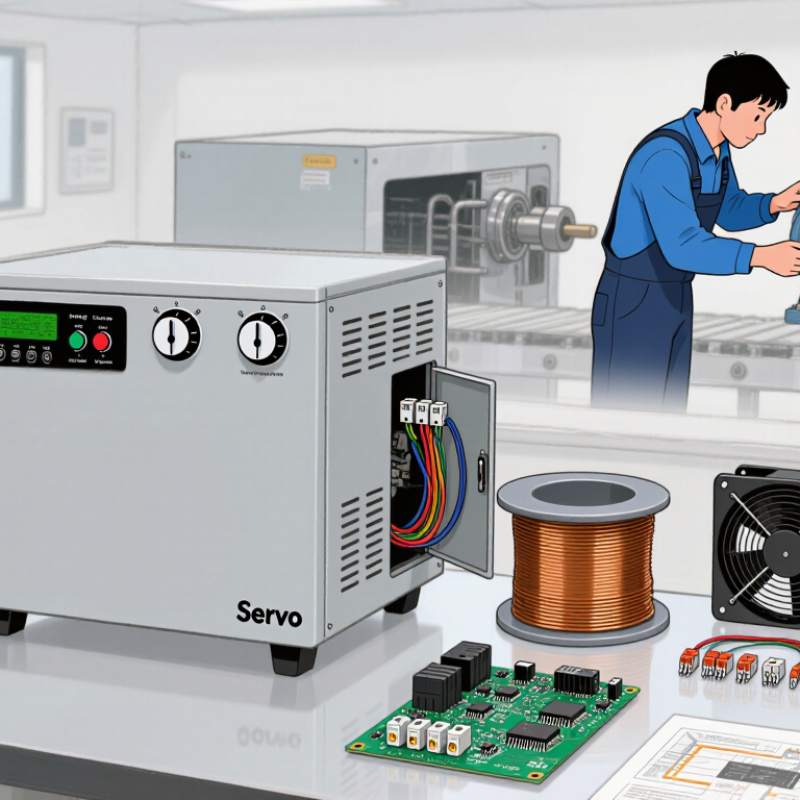
China Best Servo AC Stabilizer Supplier for Global Buyers

What a Servo AC Stabilizer Is and How It Regulates Voltage

A servo AC stabilizer keeps voltage closer to a chosen level when the incoming supply rises or falls. Inside, a sensing circuit continuously checks the output against a reference value. When it detects a difference, a servo motor moves a carbon brush along a variable transformer. This changes the correction voltage, helping compensate for the fluctuation. The adjustment is mechanical, not instantaneous. Not magic.

For example, if a workshop supply dips while a pump starts, the stabilizer can raise the voltage delivered to connected equipment, provided the unit is properly sized. Its response time, correction range, and rated capacity all matter. So does the load: a motor’s starting current may be much higher than its normal running current. A stabilizer also does not correct frequency or replace suitable protection against every electrical fault. Installation conditions and periodic inspection deserve attention, though they are easy to overlook. Choosing from the nameplate alone can be a mistake; actual load behavior should guide the selection.

Key Components and Operating Principles of Servo Stabilizers

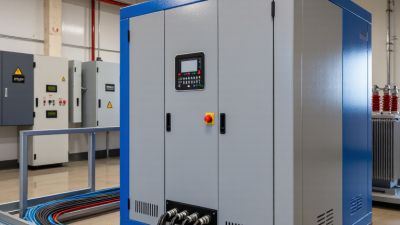
A servo AC stabilizer typically contains a voltage-sensing circuit, control board, servo motor, carbon brush, and buck-boost transformer. The sensing circuit checks incoming voltage continuously. When it drifts, the controller moves the brush across the transformer winding. This changes the correction voltage and helps maintain a steadier output. You can often hear the motor move during large fluctuations.

The U.S. Department of Energy’s Industrial Electric Motor Systems Market Opportunities Assessment reports that motor systems account for roughly 68% of U.S. industrial electricity use. That figure underscores why stable supply matters to motor-driven equipment, though a stabilizer does not automatically reduce energy consumption. Its response speed, correction range, load capacity, and maintenance condition all affect performance. A worn brush can cause unstable output. The mechanism is useful, but not magic.

Tips: Check the nameplate load and voltage range before selecting a unit. Leave space for airflow, and inspect brushes and connections on a regular schedule. Keep a simple voltage log; it can reveal recurring dips that a single reading misses.

Common Applications Across Residential and Industrial Settings

In residential settings, a Servo Ac Stabilizer can help manage voltage fluctuations that affect refrigerators, air conditioners, pumps, and home office equipment. A refrigerator may start its compressor while lights and other appliances are already running, creating a brief load change. Properly selected stabilization can reduce damaging voltage swings and support steadier operation. It is not a substitute for sound wiring or routine electrical checks. Small details matter.

For workshops and industrial sites, stabilizers may serve CNC equipment, packaging lines, laboratory instruments, and production controls. A machine restarting after a voltage dip can interrupt a shift or spoil a precise process. Before choosing capacity, technicians should review the load’s starting current, operating hours, and local supply conditions. A unit sized only for normal running demand may struggle during startup. Installation also needs suitable ventilation, secure connections, and accessible maintenance space. In practice, site conditions can differ from the equipment list, so measurements over time are useful. That step is sometimes overlooked, and it can lead to a poor match.

China Best Servo AC Stabilizer Supplier for Global Buyers - Common Applications Across Residential and Industrial Settings
Application Setting Typical Loads Common Power-Quality Concern Stabilizer Selection Considerations Indicative Capacity Range
Residential homes and apartments Lighting, refrigerators, televisions, computers, and other household equipment Supply-voltage fluctuations that may affect sensitive appliances or cause equipment to operate inconsistently Match the stabilizer to the supply type, connected load, starting current of motor-driven appliances, and the voltage range at the installation site. Often considered in the 5–20 kVA range for selected household applications; calculate from the actual combined load.
Residential air conditioning Split or central air-conditioning systems and associated controls Voltage variation during compressor operation, particularly where the supply is weak or heavily loaded Allow for compressor starting current and confirm compatibility with the air conditioner’s rated voltage, phase, and operating requirements. Capacity depends on the unit’s rated input and starting characteristics; select by equipment data rather than cooling capacity alone.
Small commercial premises Point-of-sale systems, office electronics, lighting, and small pumps or refrigeration equipment Fluctuating supply affecting electronic equipment and mixed single-phase loads Review the load profile, phase arrangement, simultaneous operating demand, and whether critical loads need a dedicated stabilizer. Commonly assessed from several kVA to tens of kVA, depending on the number and type of loads.
Workshops and machine shops Machine tools, compressors, welding equipment, and workshop control systems Voltage changes associated with motor starting or rapidly changing operating loads Consider motor inrush, duty cycle, load balance, and the stabilizer’s response and overload characteristics. Welding loads may require specific evaluation. Frequently evaluated in the tens-of-kVA range or higher; sizing requires load and starting-current information.
Manufacturing facilities Production machinery, motors, control panels, and auxiliary equipment Supply variation affecting process consistency, controls, or equipment operation Assess total demand, peak and continuous loads, three-phase balance, required input-voltage window, and site conditions. May range from tens to hundreds of kVA, depending on the connected equipment and installation design.
Commercial buildings and facilities Building services, pumps, ventilation equipment, lighting, and selected electronic systems Variation across building loads and possible voltage drop on long or heavily loaded circuits Identify which circuits require stabilization, check distribution and grounding requirements, and coordinate installation with qualified electrical personnel. Capacity is project-specific and should be based on the loads served rather than the building’s floor area alone.
Laboratories and precision work areas Measurement instruments, test equipment, and sensitive electronic devices Voltage instability that can interrupt testing or affect equipment operation Check the equipment manufacturer’s voltage tolerance and determine whether a stabilizer alone meets the need; some applications may also require UPS or other power conditioning. Usually selected for the specific equipment or protected circuit, with capacity based on rated input and operating conditions.
Capacity figures are indicative examples, not universal sizing recommendations. Actual selection depends on input-voltage range, load type, phase, power factor, starting current, duty cycle, ambient conditions, and applicable electrical standards. Have the installation assessed by a qualified electrical professional.

Standards and Performance Factors for Global Buyers

Global buyers should assess a servo AC stabilizer against the site’s actual voltage profile, load behavior, and local grid conditions. The International Energy Agency’s Electricity Grids and Secure Energy Transitions report says annual grid investment needs to rise from about USD 300 billion to over USD 600 billion by 2030. This points to growing pressure on networks, but it does not predict voltage quality at any individual facility. Measure it first.

Ask suppliers to state input-voltage range, output accuracy, correction speed, overload capacity, and efficiency under a defined load. Confirm whether the test conditions match your equipment, not just an empty bench. IEC 61000-4-30 provides methods for measuring power-quality parameters, while IEC 61000-4-11 covers immunity testing for voltage dips and interruptions. These standards help buyers compare evidence; they do not certify every stabilizer’s performance.

A practical review should include recorded voltage data, a clear wiring diagram, protection settings, and a test report showing response during load changes. Check ambient temperature, ventilation clearance, and the rating of motors that start frequently. For global shipments, request documentation aligned with the destination market’s applicable safety and EMC requirements. One awkward detail: published accuracy can conceal slow correction under fluctuating loads. Ask for the test trace, and review it with a qualified electrical engineer.

Servo AC Stabilizer Selection: Nominal Voltage by Market

Typical nominal single-phase supply voltages differ across markets. Buyers should confirm the local supply standard and site conditions, then check that a stabilizer’s input-voltage range, output accuracy, capacity, and frequency compatibility suit the intended application. Values shown are typical nominal figures, not equipment acceptance limits.

How to Evaluate Servo Stabilizer Suppliers in China

A reliable supplier should explain how its Ac Servo Stabilizer performs under your actual site conditions, not just quote a capacity. Share the load type, rated power, startup current, and expected input-voltage range. Then ask for the proposed output accuracy, correction range, response time, and overload behavior. Keep it specific. A pump and a row of office computers may need different sizing, even at similar rated loads.

Review evidence, not promises. Request a sample test report showing input and output readings under load, plus details on winding material, protection features, and production checks. Ask how each unit is inspected before shipment and whether test records can be matched to its serial number. A clear answer matters. If possible, inspect the workshop or arrange a live video review of assembly and testing. A polished brochure alone proves little.

After-sales support deserves equal attention. Confirm which spare parts are available, how troubleshooting is handled, and whether technical staff can interpret your wiring diagram. Ask for packaging photos and a realistic delivery schedule. I would not treat one successful sample as proof of consistent production; that is an easy mistake. Compare written specifications, test methods, and support commitments across several suppliers. Some details may remain unclear until installation, so document assumptions before placing an order.

Sourcing, Customization, and Export Considerations

When sourcing a Servo Avr Stabilizer, share real operating conditions, not just the equipment’s rated capacity. List the connected loads, starting currents, supply voltage range, phase, frequency, and expected daily runtime. A motor that starts under load may need more capacity than its nameplate rating suggests. Ask suppliers for the rated output, correction range, response behavior, and applicable test records. Compare the same specifications across quotations. A low price alone says little.

Customization can cover input voltage, enclosure size, cable entry, meters, and protection settings. Confirm each change in a written specification before production. For export, check destination voltage and frequency, packing dimensions, spare-part availability, and the documents your importer needs. Request photos of the finished unit and confirm how it will be secured against moisture and impact. These checks reduce avoidable delays, though small details can still be missed; review the final documents carefully.

Tips: Send a load list and site photos. Ask for a sample test report. Confirm labels and manuals match the shipment. Don’t assume a standard design fits every installation.

Warranty, Technical Support, and After-Sales Service

Warranty and service deserve the same scrutiny as voltage range when selecting a Servo Type Stabilizer. A warranty is useful only when its terms are clear: covered components, labor, travel costs, and response times should be stated in writing. Ask how long replacement parts remain available. For a factory or clinic, even a short delay can disrupt sensitive equipment. Small details matter.

Uptime Institute’s 2024 Annual Outage Analysis reported that 54% of respondents’ most recent significant outages cost more than $100,000; 16% exceeded $1 million. Those figures concern data-center outages, not stabilizer failures, but they show why dependable technical support matters.

A supplier should offer commissioning guidance, wiring checks, fault-code interpretation, and a clear escalation route. Remote help is useful. So is a technician who can explain what to measure at the input and output terminals. Ask for service records and realistic spare-parts lead times before ordering. Then confirm who handles a fault after installation. A strong promise can still be vague, and I would not treat a brochure as proof of fast support. Request the actual service procedure.

Servo Motor Voltage Regulation: IEEE Power-Quality Research, IEA Electricity Data, and the SVC-M Series

Voltage stability matters wherever electrical equipment depends on a consistent supply. The International Energy Agency’s *Electricity 2024* report recorded global electricity-demand growth of 2.2% in 2023 and projected average annual growth of 3.4% for 2024–2026. As demand rises across homes, industry, laboratories, and healthcare, voltage regulation can help equipment operate more consistently when supply conditions fluctuate. IEEE Std 1159-2019, *Recommended Practice for Monitoring Electric Power Quality*, provides guidance for identifying and characterizing power-quality disturbances, including voltage variations.

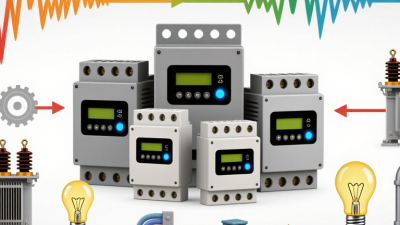
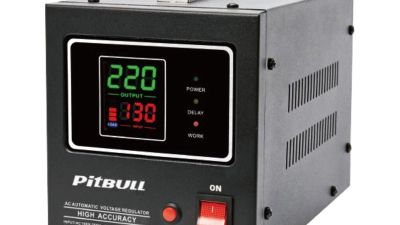
The SVC-M series is designed for precise voltage regulation and consistent output performance across a broad range of loads. It can serve household appliances and industrial machinery, as well as precision instruments, laboratory equipment, and medical devices. Selecting a regulator should take account of the connected equipment’s power requirements, operating environment, and sensitivity to voltage changes. Used as part of a considered power-quality approach, voltage regulation can support dependable operation without assuming that every load has the same needs.

FAQS

What does a servo AC stabilizer do?

It keeps output voltage closer to a chosen level when supply voltage rises or falls. It cannot prevent every electrical fault.

How does it adjust voltage?

A sensing circuit detects a difference from the reference level. A servo motor moves a carbon brush along a variable transformer to change the correction voltage. Not instant.

Can it help when a pump starts?

It may compensate for a voltage dip as a pump starts, if the stabilizer is sized correctly. Starting current can greatly exceed normal running current. Check the motor rating.

What information matters when choosing capacity?

Review the connected load, voltage range, correction speed, overload capacity, and efficiency. Consider equipment starting behavior, not only its nameplate. That detail is easy to miss.

Does a stabilizer correct frequency?

No. It regulates voltage, but does not correct supply frequency or replace other suitable electrical protection.

How can buyers compare performance claims?

Ask for defined test conditions and a response trace during load changes. Published accuracy may not reveal slow correction under fluctuating loads. Ask for the evidence.

Which standards can help assess power quality?

IEC 61000-4-30 describes measurement methods for power-quality parameters. IEC 61000-4-11 covers immunity testing for voltage dips and interruptions. These standards do not certify every stabilizer.

What should be checked before installation?

Review recorded site voltage, the wiring diagram, protection settings, ambient temperature, and ventilation clearance. Have a qualified electrical engineer review the test results. Measure first.

Conclusion

A Servo Ac Stabilizer automatically corrects fluctuations in incoming voltage to provide a more stable power supply for connected equipment. It typically uses a voltage-sensing circuit, control system, servo motor, and variable transformer to detect changes and adjust output. By responding to under-voltage and over-voltage conditions, it can help protect household appliances, office equipment, machinery, and other electrical loads in residential and industrial environments.

For global buyers, selecting a suitable stabilizer means comparing capacity, input-voltage range, output accuracy, response time, efficiency, and compliance with relevant market standards. When evaluating suppliers in China, consider manufacturing capability, product testing, customization options, clear technical documentation, and experience with export packaging and shipping. Confirm lead times, installation guidance, warranty terms, spare-parts availability, and after-sales technical support before ordering. These factors help buyers assess product suitability and build a dependable sourcing relationship.
Sophia

Sophia

Sophia is a seasoned marketing professional with over a decade of experience in the technology manufacturing sector. Her expertise lies in the intricacies of voltage regulators and intelligent power solutions, an area where she has cultivated a deep understanding of both product functionality and......
Previous Top 10 Voltage Stabilizer Manufacturers in the World