Leave Your Message
0%

Picking out the best servo voltage stabilizer from China isn’t just about comparing prices or looking at shiny product images. You really need to dig a little deeper—consider how fast it corrects voltage issues, how accurate its output is, and how it handles sudden changes in load. Plus, don’t forget to check its insulation quality and what kind of long-term support the supplier offers. A good stabilizer should be able to protect sensitive stuff in factories, hospitals, data centers, and other commercial building setups.

Roger C. Dugan, a well-respected power-quality engineer, summed it up nicely: “Power quality problems show up as deviations in voltage, current, or frequency, and those can cause equipment to fail or act up.” His point? That’s why you really need to see how a voltage stabilizer performs under actual working conditions, not just judge it based on specs in a brochure. Imagine a factory—there might be dusty air, uneven loads, motor startups, and shaky power from the grid all happening in the same shift.

When you're looking at Chinese brands like Sanke, ATO, or YIYEN, they all have different designs, capacities, and control systems. But just knowing the brand isn’t enough to guarantee it’s gonna do the job properly. Ask for factory test reports, data on correction ranges, details about thermal protection, and documented efficiency stats. Also, make sure the supplier explains maintenance routines clearly—that’s super important.

In real life, experience on the ground can reveal some pretty disappointing gaps. Some buyers focus only on getting the lowest price, and they overlook factors like installation quality, cable sizing, or grounding, which can seriously weaken even the best stabilizer. So, the 'best' model isn’t one-size-fits-all. It needs to match your local power grid, the kind of loads you'll connect, the environment it operates in, and your service expectations. Even if you’re careful, it’s still smart to do independent testing and a practical site survey before making your final decision—that way, you’re more likely to end up with a stabilizer that actually works for you.
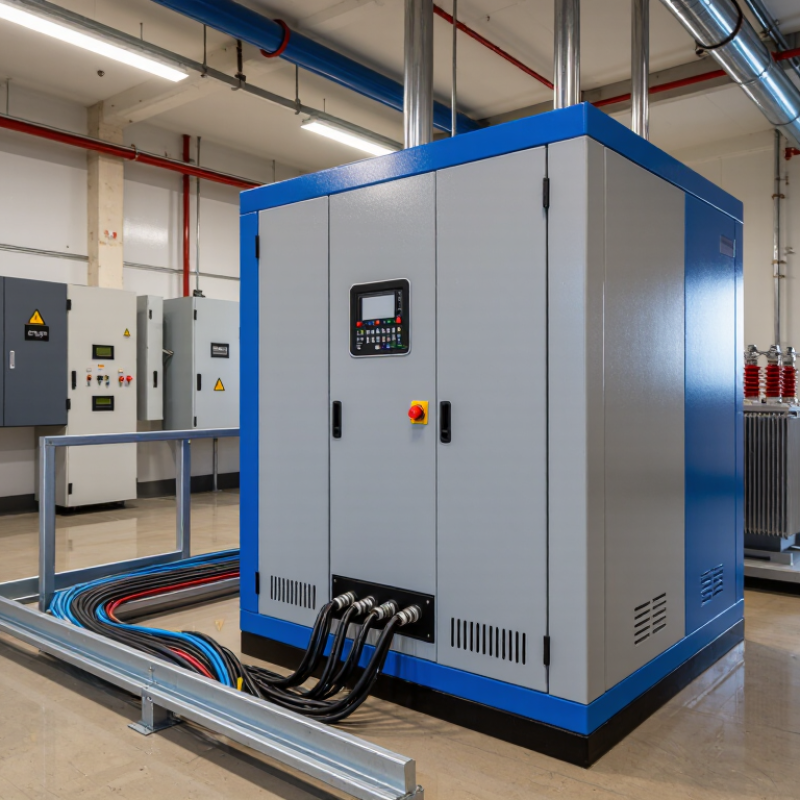
What Is the Best Servo Voltage Stabilizer from China?

What Is a Servo Voltage Stabilizer and How Does It Work?

A servo voltage stabilizer is an electromechanical device that maintains a steady output voltage. It protects equipment from prolonged overvoltage, undervoltage, and unstable supply conditions. Its core includes a variac, servo motor, control circuit, and compensation transformer. A voltage-sensing circuit continuously checks the output. When the voltage changes, the controller sends a signal to the motor. The motor then turns the variac to adjust the correction level. Small corrections matter.

During operation, the variac changes the transformer’s effective winding position. The compensation transformer adds or reduces voltage before power reaches the load. This process is automatic, but it is not instantaneous. A sudden surge may pass through before the motor responds. Therefore, users should check response time, correction range, output accuracy, and overload protection. In a workshop, loose terminals, dust, and poor ventilation can also create unstable readings. Installation quality matters more than many buyers expect.

When choosing a servo stabilizer from China, review test reports, wiring diagrams, efficiency data, and protection settings. Confirm whether the rated capacity supports motor starting current, not only normal consumption. Ask for temperature-rise results and clear maintenance instructions. A reliable manufacturer should explain calibration procedures and replacement parts without vague promises. However, documentation can still overlook real site conditions. Cable length, generator quality, and uneven phase loading may change performance. The device should be tested under the intended load before full deployment. That step is often skipped.

Which Technical Specifications Define Stabilizer Performance?

Choosing the best Servo Type Voltage Stabilizer from China starts with measurable specifications, not attractive pricing. Check the input voltage range first, such as 280–430V for a three-phase system. The output accuracy should usually remain near ±1% to ±3%. Smaller variation protects sensitive control equipment. Capacity matters too. Select a kVA rating above the actual load, because motors often draw several times their running current.

Response time and correction speed reveal practical performance. A stabilizer with a 10–20 millisecond response can react quickly to sudden voltage changes. However, correction speed alone is not enough. Ask about motor durability, brush quality, heat dissipation, and the expected number of operations. In dusty panel rooms, weak ventilation can reduce service life. Efficiency above 97% is useful, but confirm the test conditions. I have seen impressive laboratory figures perform differently beside welding equipment. The waveform should remain stable, with limited distortion and noise.

Tips: Request a full test report, wiring diagram, and protection list. Confirm overload, short-circuit, phase-loss, overvoltage, undervoltage, and bypass functions. Check whether the unit supports 50Hz or 60Hz operation. Installation space and ambient temperature also matter. A cabinet rated for 40°C may struggle in a hot workshop. Do not select capacity by adding appliance labels only. Measure starting current where possible. I still think some specifications need independent verification, especially when test methods are unclear. Clear records build more confidence than promises.

How Should You Match Capacity, Input Range, and Load Type?

What Is the Best Servo Voltage Stabilizer from China?

Choosing a Servo Motor Voltage Stabilizer starts with the real load, not the nameplate alone. Record the motor’s running current, starting current, voltage, and phase arrangement during normal production. A motor may draw 18 kVA while operating, yet demand much more for a few seconds during acceleration. Select a stabilizer with at least 20–30% spare capacity, or more when several motors start together. I have seen undersized units overheat beside otherwise healthy CNC equipment. The calculation looked correct, but the operating pattern was ignored.

The input range should match measured site conditions. Do not rely only on a stated 380 V supply. Measure voltage during busy shifts, machine starts, and evening demand. If readings move between 300 V and 430 V, choose a stabilizer that safely covers this range without constant bypass operation. Load type also matters. Servo motors, inverters, PLCs, and control boards can react differently to correction speed, waveform distortion, and phase imbalance. A three-phase motor system needs suitable phase control and protection, not simply a larger cabinet. Bigger is not always better.

Tips: Check the stabilizer’s response time, overload rating, bypass function, cooling method, and installation space. Ask for factory test records and request a site-load assessment. Leave room for expansion. Still, recheck your assumptions after installation; real machines often behave differently from spreadsheets.

Which Protection and Control Features Matter Most?

Choosing the best Servo Controlled Voltage Stabilizer from China depends on protection and control, not cabinet appearance. In field inspections, I check voltage correction speed, output accuracy, overload capacity, and bypass design. A useful unit should correct unstable input without creating sudden output steps. IEC 61000-4-30 provides measurement methods for voltage quality, including sags, swells, interruptions, and frequency variation. These conditions can damage motors, sensors, and control boards.

Uptime Institute’s 2023 Global Data Center Survey reported that 60% of serious outages cost more than $100,000, while 15% exceeded $1 million. This makes independent protection important. Look for adjustable overvoltage and undervoltage trips, phase-loss protection, short-circuit protection, thermal alarms, and automatic bypass. A Servo Controlled Voltage Stabilizer should also provide event records, input and output meters, and remote alarm contacts. These details help technicians identify whether the fault came from the grid, the load, or the stabilizer itself. Faster correction is not always better. Poor tuning may cause hunting, especially with welding equipment or large compressors.

Tips: Request a factory test report with input range, correction time, output accuracy, efficiency, and temperature-rise results. Test the bypass under load. Ask whether alarms remain active during bypass. I would also inspect the control board cooling path. It is easy to overlook. My own preference is conservative sizing, often 20% above the measured continuous load, though this margin should be checked against motor starting current. No specification replaces a real load test.

How Can You Compare Chinese Servo Stabilizer Manufacturers?

Choosing the best servo stabilizer from China requires more than comparing quoted prices. A serious comparison starts with the manufacturer’s engineering evidence. Ask for voltage range, correction speed, load capacity, efficiency, and control accuracy. These figures should appear in formal test reports, not only in sales messages. For a 3 Phase Servo Controlled Voltage Stabilizer, check phase balance under uneven loads. Request videos showing testing with motors, compressors, or welding equipment.

Factory capability matters as much as product design. Review transformer materials, copper winding details, cabinet thickness, cooling methods, and component traceability. A clean assembly area is useful evidence, but it does not prove long-term reliability. Ask whether technicians perform full-load testing before shipment. Also examine calibration records and sample inspection procedures. Small details count.

Service can separate two similar manufacturers. Compare warranty terms, spare-part availability, installation guidance, and response times. Ask for references from applications with similar power demands. A supplier that answers technical questions clearly usually understands its equipment. Still, do not accept every document without checking it. I have seen impressive specifications fail to explain overload behavior or maintenance needs. That gap deserves attention. A lower quotation may hide thinner copper, weaker protection, or limited after-sales support. Choose the manufacturer whose evidence remains clear when practical questions become uncomfortable.

How to Compare Chinese Servo Voltage Stabilizer Manufacturers

The chart presents a practical procurement weighting model for comparing manufacturers without relying on brand names. Technical performance and protection account for the largest share, while efficiency, customization, compliance documentation, after-sales support, and delivery capability help verify overall supplier reliability.

What Installation, Maintenance, and Safety Practices Are Required?

Choosing a servo voltage stabilizer from China starts with the load, not the catalog photograph. Record rated power, starting current, phase arrangement, frequency, and acceptable output tolerance. Motors and compressors need extra capacity during startup. A 20–30% reserve is a practical starting point, but site measurements are better. Ask for test reports, wiring diagrams, enclosure ratings, and replacement-part availability. Do not trust impressive claims alone. An independent electrician should verify compliance with local electrical requirements before purchase. I have seen small wiring errors create heat, noise, and nuisance trips.

Mount the stabilizer upright in a dry, ventilated room with clear access around its vents. Keep it away from water pipes, corrosive fumes, dust, and direct sunlight. Use correctly sized cables, protective breakers, grounding conductors, and a bypass arrangement where appropriate. A qualified technician should check terminal torque with a calibrated tool. Loose terminals can discolor and fail under load. Leave space for airflow. Before energizing, measure input voltage and confirm the output setting without connected equipment. Then connect loads gradually, watching current, sound, and temperature.

Inspect brushes, carbon dust, fans, terminals, and alarms on a documented schedule. Clean only after isolation, lockout, and verification that no voltage remains. Never bypass protective devices or open the cabinet while energized. Monthly checks suit dusty sites; cleaner rooms may need quarterly service. However, that interval is not universal. Humidity and unstable supply can shorten it. Record measured voltages, load currents, fault codes, and repair dates. If output hunts, smells burnt, or becomes unusually hot, disconnect nonessential loads and call a qualified professional. My earlier assumption that “stable” means maintenance-free was wrong. That lesson deserves attention.

What Is the Best Servo Voltage Stabilizer from China? - What Installation, Maintenance, and Safety Practices Are Required?

Category Selection or Practice Typical Technical Data or Requirement Why It Matters Recommended Verification
Application suitability Choose a servo-controlled automatic voltage stabilizer for loads requiring stable voltage. Suitable for manufacturing equipment, control systems, laboratory devices, HVAC equipment, and other sensitive loads when the load is compatible with the stabilizer. A servo stabilizer corrects voltage gradually through a motor-driven variable transformer and is generally appropriate for continuous voltage fluctuation. Confirm the load type, starting current, harmonic content, required voltage, and operating environment before purchase.
Rated capacity Select the rating according to the actual and starting load. Common ratings range from approximately 1 kVA to several hundred kVA. A practical design margin is often 20–30% above the calculated continuous load, subject to the manufacturer’s instructions. Insufficient capacity can cause overheating, nuisance trips, poor regulation, or premature component failure. Measure maximum operating current and consider motor, compressor, transformer, and other inrush currents.
Input voltage range Match the correction range to the site’s measured voltage variation. Common designs may provide input ranges such as ±15%, ±20%, or ±25% around the nominal supply voltage; the exact range must be specified for the installation. A stabilizer cannot regulate voltage outside its specified operating range without bypassing, shutting down, or producing an incorrect output. Record voltage at different times of day for several operating days, including peak-load periods.
Output voltage accuracy Select an accuracy level that matches the connected equipment. Typical servo stabilizers are specified at approximately ±1% to ±3% output accuracy under defined conditions. Tighter regulation can reduce malfunction and voltage-related stress in sensitive equipment. Request a factory test report and verify output voltage with a calibrated true-RMS meter after installation.
Phase configuration Use a single-phase or three-phase configuration according to the supply and load. Common systems include single-phase input/output and three-phase input/output. Three-phase applications require correct phase sequence and balanced loading where applicable. Incorrect phase configuration or severe phase imbalance may damage equipment or prevent proper operation. Verify voltage between phases, phase-to-neutral voltage, phase sequence, frequency, and neutral continuity.
Frequency compatibility Confirm compatibility with the local power frequency. Most equipment is designed for 50 Hz or 60 Hz operation; the stabilizer’s rated frequency must match the supply and connected load. A voltage stabilizer regulates voltage but normally does not convert frequency. Check the nameplate, technical data sheet, and measured supply frequency before energizing.
Response and correction speed Choose a correction speed suitable for the rate of voltage fluctuation. Many servo stabilizers specify correction speeds in volts per second; the actual value varies by design, capacity, and voltage range. Slow correction may be unsuitable for rapidly changing loads, while servo systems are generally intended for gradual or continuous voltage variation. Compare the specified correction speed with the measured fluctuation pattern and equipment requirements.
Efficiency and heat dissipation Install the unit in a clean, dry, ventilated location. Well-designed units commonly achieve high efficiency, often above 95% at suitable loading, but losses still produce heat. Restricted airflow can raise internal temperature and shorten the life of insulation, control boards, and moving parts. Maintain the clearance specified by the manufacturer and keep ventilation openings free from dust and obstructions.
Installation location Use an indoor or appropriately protected location with low dust and humidity. Avoid water, corrosive gases, excessive vibration, direct sunlight, explosive atmospheres, and temperatures outside the specified operating range. Environmental stress can cause insulation breakdown, corrosion, tracking, mechanical wear, and control errors. Check the enclosure protection rating and environmental limits against the installation site.
Electrical protection Install correctly rated upstream and downstream protection. Use circuit breakers or fuses sized according to the rated current, conductor capacity, short-circuit level, and applicable electrical code. Protection limits damage from short circuits, overloads, and abnormal operating conditions. Have a qualified electrician verify protective-device coordination and conductor sizing.
Grounding and bonding Connect the stabilizer enclosure to a reliable protective earth. Use a dedicated protective-earth conductor sized according to local code; do not use water pipes or other unsuitable paths as the sole grounding method. Proper grounding helps reduce electric-shock risk and provides a path for fault current. Test continuity and earth impedance using equipment and procedures required by local regulations.
Cable and terminal installation Use correctly sized cables, lugs, glands, and strain relief. Terminate conductors securely, maintain correct polarity and phase sequence, and torque terminals to the specified value. Loose or undersized connections can create heat, arcing, voltage drop, and fire hazards. Inspect connections after initial operation and use thermal imaging where appropriate.
Startup and commissioning Energize the stabilizer under controlled conditions before connecting the full load. Check input voltage, output voltage, frequency, phase sequence, alarms, bypass status, and output behavior at no-load and progressive load. Commissioning confirms correct wiring and helps identify abnormal noise, vibration, heating, or regulation errors. Record baseline measurements for future maintenance and troubleshooting.
Routine inspection Inspect the enclosure, wiring, cooling path, indicators, and mechanical assembly regularly. A monthly visual inspection is a practical starting point; dusty, hot, or heavily loaded sites may require more frequent checks. Early detection reduces the risk of unplanned downtime and component damage. Look for discoloration, burning odor, loose parts, unusual sounds, excessive vibration, dust buildup, and alarm indications.
Carbon brush and servo mechanism care Inspect moving parts and contact surfaces according to operating hours and service instructions. Servo motors, brushes, contact surfaces, bearings, and gears are wear components and may require cleaning, adjustment, lubrication, or replacement. Wear can cause unstable output, noise, slow correction, arcing, or loss of regulation. Use only approved replacement parts and service procedures; isolate power before opening the enclosure.
Cleaning and cooling Remove dust from filters, vents, fans, and internal surfaces using safe methods. Cleaning intervals depend on dust levels; compressed air should be used carefully to avoid driving contamination deeper into components. Clean airflow lowers operating temperature and helps prevent tracking and insulation contamination. De-energize, lock out, and verify absence of voltage before internal cleaning.
Overload and thermal protection Use protection functions appropriate for the connected load. Useful functions may include overload, over-temperature, over-voltage, under-voltage, phase-loss, phase-sequence, short-circuit, and bypass protection. Protection functions help prevent damage when the supply or load operates outside normal conditions. Test alarms and shutdown functions during planned maintenance, following the service manual.
Safety isolation Apply lockout/tagout before inspection, cleaning, adjustment, or repair. Disconnect all possible sources, wait for stored energy to discharge, and verify zero voltage with a properly rated tester. The stabilizer may contain energized terminals or stored electrical energy even after the main switch is turned off. Work only by trained personnel using suitable personal protective equipment and approved procedures.
Standards and documentation Request complete technical and compliance documentation. Documentation should include ratings, wiring diagrams, protection functions, environmental limits, test results, installation instructions, spare-parts information, and applicable conformity evidence. Clear documentation supports safe installation, comparison, maintenance, and regulatory review. Check conformity with the electrical standards and certification requirements applicable in the destination country.
Best overall purchasing profile Prioritize verified performance, protection, serviceability, and documentation rather than price alone. A suitable unit should match the nominal voltage, frequency, phase system, capacity, input range, output accuracy, environmental conditions, protection requirements, and local compliance obligations. The best stabilizer is application-specific; a higher capacity or tighter accuracy is not automatically better if the design does not match the site. Compare independent test evidence, warranty terms, spare-parts availability, technical support, delivery requirements, and total lifecycle cost.

Note: Technical values shown are typical selection ranges or practices, not universal specifications. Final sizing, installation, protection, grounding, and maintenance must follow the equipment documentation and applicable local electrical codes.

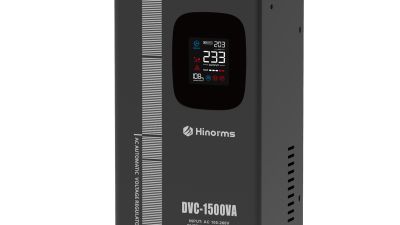
Servo Motor Type Voltage Regulator DVC Series: Precision Power Control for Industrial Automation

The Servo Motor Type Voltage Regulator DVC Series is designed for applications that demand high power quality and dependable voltage stability. Using a precision servo motor control system, it continuously monitors incoming voltage and adjusts the output to maintain a consistent, accurate supply. This advanced regulation performance helps protect sensitive equipment from voltage fluctuations, supporting reliable operation across a wide range of electrical environments.

With its precise output adjustment capability, the DVC Series is suitable for residential appliances, industrial automation systems, precision instruments, laboratory equipment, and medical devices. It can help reduce the impact of unstable power on equipment performance while improving operational continuity and energy management. Available for different power requirements and installation conditions, this series provides a practical solution for facilities seeking accurate power control, stable equipment operation, and long-term electrical reliability.

FAQS

What is a servo voltage stabilizer?

It is an electromechanical device that keeps output voltage near a steady level. It uses a variac, servo motor, control circuit, and compensation transformer. Small corrections matter. The unit helps protect equipment from prolonged voltage changes.

How does a servo voltage stabilizer adjust voltage?

A sensing circuit continuously checks the output voltage. When voltage changes, the controller signals the servo motor. The motor turns the variac to change the correction level. The compensation transformer then adds or reduces voltage. The process is automatic, but not instant.

Can a servo stabilizer stop every voltage surge?

No. A sudden surge may pass before the motor responds. Check the response time before selecting equipment. Also review correction range, output accuracy, and overload protection. Do not expect one cabinet to solve every power problem.

How should stabilizer capacity match the load?

Calculate actual running current, starting current, voltage, and phase arrangement. A motor may use 18 kVA during operation but require much more during startup. Allow at least 20–30% spare capacity. Add more margin when several motors start together. My estimate may still be wrong.

Why is motor starting current important?

Motors can demand several times their normal current during acceleration. An undersized stabilizer may overheat beside healthy machinery. This problem often appears during startup, not steady operation. Check the starting pattern, not only the nameplate. Real production is messier.

How do I choose the correct input voltage range?

Measure voltage during busy shifts, machine starts, and evening demand. For example, readings may move between 300 V and 430 V. Choose a stabilizer that safely covers the measured range. Avoid relying only on a stated supply value. Site measurements are stronger evidence.

Does load type affect stabilizer selection?

Yes. Servo motors, inverters, control boards, and PLC systems may react differently. Correction speed, waveform quality, and phase imbalance can affect performance. Three-phase motor systems need suitable phase control and protection. A larger cabinet is not automatically better.

What should I check when comparing manufacturers?

Request formal test reports, wiring diagrams, efficiency data, and protection settings. Check voltage range, correction speed, load capacity, and control accuracy. Ask for full-load tests using similar equipment. Review transformer materials, cooling methods, cabinet construction, and component traceability. Good documents help, but they are not perfect.

What installation and maintenance details matter?

Loose terminals, dust, and poor ventilation can create unstable readings. Leave enough space around the cabinet for cooling and service access. Ask for calibration procedures, replacement parts, and maintenance instructions. Test the stabilizer under the intended load before full deployment. That step is often skipped.

Conclusion

A Servo Voltage Stabilizer is an automatic voltage regulation device designed to provide a stable power supply by continuously detecting input voltage and adjusting the output through a motor-driven variable transformer. This article explains how the system works and examines the technical specifications that determine performance, including voltage accuracy, response speed, regulation range, efficiency, capacity, and waveform quality. It also describes how to select the correct capacity according to starting currents, operating loads, and future expansion needs, while considering whether the equipment will serve resistive, inductive, or sensitive electronic loads.

The guide further outlines important protection and control functions, such as overload protection, surge protection, phase-loss monitoring, temperature control, bypass operation, alarms, and display systems. It provides practical criteria for comparing Chinese manufacturers, including engineering quality, testing standards, customization capability, documentation, warranty, and after-sales support. Finally, it highlights essential installation, grounding, ventilation, inspection, maintenance, and safety practices to ensure reliable long-term operation.
Sophia

Sophia

Sophia is a seasoned marketing professional with over a decade of experience in the technology manufacturing sector. Her expertise lies in the intricacies of voltage regulators and intelligent power solutions, an area where she has cultivated a deep understanding of both product functionality and......
Previous What Are China Top Voltage Booster Stabilizer Suppliers?