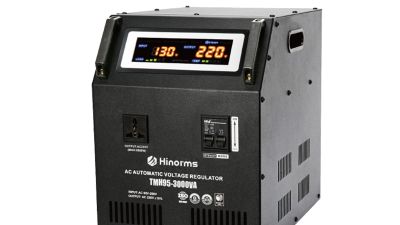
Choosing an Auto Voltage Stabilizer in 2026 isn’t just about comparing prices or looking at shiny product photos. Honestly, voltage fluctuations can show up in all kinds of ways—dimmed lights, unexpected resets, strange motor noises, or charging that’s all over the place. So, a smart buying decision starts with actually understanding the conditions where you’ll install it. Take a moment to record the normal voltage levels, and note the lowest and highest readings during peak hours. Little details like these really do make a difference.
This guide aims to help you focus on key specs, real-world installation concerns, and reliable performance. We’ll talk about how things like capacity, response time, correction range, efficiency, protection features, and bypass functions can impact everyday use. While brands like Schneider Electric, Eaton, and ABB are well-known and can offer good reference points, don’t just buy based on brand recognition alone—always check the technical data to be sure it fits your needs.
Something that works smoothly in a quiet showroom might not handle the chaos of a busy workshop with compressors, pumps, or welding machines. It’s easy to underestimate how different load types can affect performance. For example, inductive equipment might need extra starting capacity, and sensitive electronics demand a stable, clean power output. Proper installation—think grounding, ventilation, and routine checks—plays a big role in safety and how long your stabilizer will last.
Honestly, no buying guide can foresee every detail of your building’s electrical setup. I’d be pretty cautious without real measurements and verified manufacturer specs. That’s just the reality. Remember, the best Auto Voltage Stabilizer isn’t necessarily the biggest or most expensive one. It’s the one that actually matches your load, local power conditions, and safety standards. So, this 2026 guide is here to help you question bold claims, compare meaningful specs, and avoid favouring looks over real performance.
What Is an Auto Voltage Stabilizer and How Does It Work?
An auto voltage stabilizer protects electrical equipment from unstable supply. It monitors incoming voltage through a sensing circuit. When voltage drops or rises, a control unit adjusts the output through relays, servo mechanisms, or electronic switches. The goal is simple: keep appliances closer to their required voltage range.
In practical use, the stabilizer reacts within a short time, but it is not magic. A severe surge, loose connection, or undersized unit can still cause damage. An Auto Cut Voltage Stabilizer adds a safety feature by disconnecting power when voltage becomes dangerously high or low. It reconnects after conditions return to a safer level. This delay helps protect compressors in refrigerators and air conditioners. However, response speed and accuracy vary between designs. Check the rated capacity, input range, output tolerance, and protection features before buying.
Tips: Measure your equipment’s starting load, not only its running wattage. Leave extra capacity for motors and compressors. Install the unit in a dry, ventilated area, away from heat and moisture. Have a qualified electrician inspect grounding and wiring. I have found that many failures come from poor installation, not the stabilizer itself. Also, a stabilizer cannot correct every power problem; regular maintenance and realistic load planning still matter.
2026 Top Auto Voltage Stabilizer Buying Guide
What Is an Auto Voltage Stabilizer and How Does It Work?
This chart shows the basic operating principle of an automatic voltage stabilizer in a 230 V system.
When the incoming voltage falls below the target, the stabilizer boosts it; when the incoming voltage rises,
it reduces it. The regulated output is shown at the nominal 230 V setpoint. Actual correction range, accuracy,
response time, and load capacity depend on the stabilizer design and rating.
Why Your Vehicle May Need a Voltage Stabilizer in 2026
Why Your Vehicle May Need a Voltage Stabilizer in 2026
Modern vehicles rely on sensitive sensors, control modules, cameras, and charging systems. Voltage fluctuations can appear during cold starts, heavy accessory use, or a weak battery. An
Auto Cut Off Voltage Stabilizer
can disconnect selected equipment when voltage drops dangerously low. This may help prevent deep battery discharge during overnight parking.
The need is growing with vehicle complexity. The IEA’s Global EV Outlook 2024 reported nearly 14 million electric cars sold worldwide in 2023. Many still use low-voltage systems for lighting, safety controls, and communication equipment. These systems need stable power. However, a stabilizer cannot repair a failing alternator or corroded ground connection. That mistake is common.
Check the basics first. A technician should test resting voltage, charging voltage, battery health, and terminal resistance. ISO 16750-2 also treats supply-voltage variation and electrical transients as important vehicle conditions. AAA’s 2023 Your Driving Costs report estimated maintenance and repair at 9.83 cents per mile. Small electrical faults can become expensive when ignored.
Choose protection based on the vehicle’s voltage architecture and accessory load. Some installations need only cutoff protection. Others require regulated output. I would avoid universal claims here. A poorly matched device may interrupt essential electronics. The safest approach uses measured voltage thresholds, correct fusing, and professional installation. Even then, the stabilizer is support equipment, not a cure-all.
Key Types of Auto Voltage Stabilizers and Their Differences
2026 Top Auto Voltage Stabilizer Buying Guide?
Relay-type automatic voltage stabilizers use electromagnetic switches to correct unstable power. They are affordable and respond reasonably well to ordinary voltage changes. However, switching steps can create brief fluctuations, and relay contacts eventually wear. They suit refrigerators, lighting, and general household equipment. They are less suitable for sensitive laboratory or medical electronics.
Servo-motor stabilizers adjust voltage through a motor-driven carbon brush. Their correction is smoother and more precise, especially during severe voltage variation. The trade-off is easy to miss. Motors make noise, move more slowly, and require periodic maintenance. Choose one with overload protection, a wide input range, and enough capacity for startup surges. A unit rated only for normal running power may fail when a compressor starts.
Static stabilizers use power electronics instead of moving parts. They react quickly, operate quietly, and usually provide the strongest control for computers, communication equipment, and precision instruments. They often cost more and may need professional installation. Check response time, output accuracy, thermal protection, bypass options, and waveform compatibility. In practice, buyers sometimes focus only on kVA capacity. That is an incomplete test. Measure the actual load, consider future expansion, and verify local electrical requirements before purchase. I would also question any product promising perfect output under every condition. No stabilizer can correct unsafe wiring or unlimited overloads.
Essential Specifications to Compare Before Buying
Choosing an Auto Voltage Regulator in 2026 requires more than checking its price or cabinet size. Start with the input voltage range. A unit rated for 140–280 volts may suit unstable supply better than one with a narrow range. Compare output accuracy, often listed as ±1%, ±3%, or ±5%. Sensitive equipment benefits from tighter control. Check the capacity in VA or kVA, and leave at least 20% headroom for startup surges. Motors, compressors, and pumps can briefly demand much more power.
Response time also matters. Fast correction helps during sudden voltage dips, but mechanical designs may produce audible clicking. Electronic models can react quietly, though their heat management deserves close inspection. Look for overload protection, thermal shutdown, short-circuit protection, and a clear voltage display. A bypass function can keep equipment running during maintenance, but it should not encourage careless servicing. I always check ventilation space in real installations. A regulator placed inside a cramped cabinet may overheat, even when its data sheet looks excellent.
Tips: Measure your actual voltage for several days before buying. Test during peak operating hours. Add the startup load, not only the normal load. Check cable size, grounding instructions, and operating temperature. Ask whether the stated accuracy applies under full load. It often does not. Also compare noise level and maintenance access. A slightly imperfect installation can reduce performance, and I have learned that tidy wiring is not merely cosmetic. Controls should remain readable from a standing position, especially when the room is dim.
How to Choose the Right Stabilizer for Your Vehicle
Choosing the right auto voltage stabilizer starts with your vehicle, not the product label. Check the battery and alternator voltage with a reliable multimeter. A healthy charging system often reads near the manufacturer’s specified range while the engine runs. Measure it cold, then test again with headlights and air conditioning switched on. Do this carefully.
Compare the stabilizer’s input range, output tolerance, current capacity, fuse protection, and polarity requirements. The device must handle your vehicle’s electrical load without overheating. A small unit may suit basic accessories, but it may fail under demanding conditions. Modern vehicles contain sensitive control modules, sensors, and communication networks. Avoid any stabilizer that promises unlimited fuel savings or repairs every electrical fault. Those claims deserve skepticism.
Installation quality matters as much as specifications. Use a protected circuit, secure connections, and suitable wire thickness. Poor grounding causes trouble. Ask a qualified automotive technician to inspect the system, especially if the vehicle has complex electronics. I have seen owners blame a stabilizer for problems caused by corroded terminals or a weak battery. That mistake is easy to repeat. A stabilizer cannot replace proper diagnosis. Leave enough space around the device for airflow, and check its temperature after a short drive. If voltage readings become unstable, remove the unit and investigate the charging system before continuing to drive.
Installation, Compatibility, Safety, and Maintenance Factors
2026 Top Auto Voltage Stabilizer Buying Guide: Installation, Compatibility, Safety, and Maintenance Factors
A Voltage Stabilizer should match the vehicle’s electrical architecture, not merely its advertised output. Check nominal voltage, continuous current, peak load, grounding method, and connector type before purchase. Modern vehicles may combine 12-volt systems with high-voltage propulsion batteries. The IEA’s Global EV Outlook 2025 reports more than 17 million electric cars sold globally in 2024. That shift makes compatibility testing increasingly important. Confirm the stabilizer supports the vehicle’s charging strategy, diagnostic network, and start-stop function.
Installation quality matters as much as the device itself. Mount it away from exhaust heat, water spray, and moving belts. Use correctly rated fuses near the power source. A loose ground can create flickering lights, unstable sensor readings, or silent module resets. ISO 16750-2 addresses electrical load and supply-voltage tests for road vehicles. Follow its principles, but do not treat a consumer unit as laboratory-grade protection. I have seen neat installations fail because the cable was too thin.
Safety checks should include polarity, temperature rise, insulation, and parasitic drain. Never bypass the vehicle’s original protection circuits. ADAC’s 2024 breakdown statistics attributed 44.1% of reported failures to starter-battery problems. Maintenance should include terminal inspection, voltage logging, and fuse checks every few months. Record readings before and after installation. That evidence exposes problems early, although my own first inspection routine was too informal.人人操
Relay Type Voltage Regulator TMH Series: Features, Applications, and Selection Guide
Relay Type Voltage Regulator TMH Series: Features, Applications, and Selection Guide
The TMH Series relay type voltage regulator is designed to compensate for fluctuations in the power grid and provide a more stable output voltage for connected equipment. Its relay-based adjustment system responds to changes in input voltage by selecting suitable compensation levels, helping protect appliances from the effects of overvoltage, undervoltage, and unstable power. The series is suitable for a wide range of applications, particularly household appliances such as refrigerators, televisions, air conditioners, washing machines, and other sensitive electrical devices.
When selecting a suitable model, users should first check the total power rating of the equipment to be connected. The regulator’s rated capacity should exceed the combined operating power, with additional allowance for appliances that require higher starting current, such as compressors and motors. Input voltage range, output voltage requirements, response characteristics, installation environment, and the number of available outlets should also be considered. Models with appropriate protection functions, clear status indicators, and reliable heat dissipation can improve daily operation and maintenance convenience.
For household use, the regulator should be installed in a dry, well-ventilated location and connected according to its rated specifications. It can help maintain consistent voltage for individual appliances or selected groups of equipment, reducing interruptions caused by common grid fluctuations and supporting more stable electrical performance.
FAQS
It monitors incoming voltage and adjusts output when supply becomes too high or too low. It keeps equipment closer to its required range.
A sensing circuit detects variation. A control unit then uses relays, servo mechanisms, or electronic switches to adjust output.
It disconnects equipment during dangerously high or low voltage. Power returns after conditions become safer. This delay can protect compressors.
No. It cannot repair a failing alternator, damaged wiring, weak grounding, or a severe surge. It is support equipment, not a cure-all.
Measure running and starting loads. Motors and compressors may briefly demand much more power. Leave at least 20% extra capacity.
Compare input range, output accuracy, VA or kVA capacity, response time, protection features, noise, and operating temperature.
Record voltage for several days, including peak operating hours. A wider input range may suit unstable supply better than a narrow one.
Use a dry, ventilated location away from heat and moisture. Leave space around the cabinet. Crowded installation can cause overheating.
Test resting voltage, charging voltage, battery health, terminal resistance, and accessory load. A mismatched device might interrupt essential electronics.
It is strongly recommended. A qualified electrician or technician should inspect wiring, grounding, fusing, and voltage thresholds. Tidy wiring is not enough.
Conclusion
An Auto Voltage Stabilizer helps maintain a steady electrical voltage in a vehicle, reducing fluctuations that may affect sensitive electronics, lighting, battery performance, and charging systems. This guide explains how stabilizers regulate voltage, why modern vehicles may benefit from added electrical stability, and how different types vary in design, capacity, response speed, and installation method. It also highlights the key specifications buyers should compare, including input range, output voltage, current rating, efficiency, protection features, operating temperature, and compatibility with the vehicle’s electrical system.
Choosing the right stabilizer requires matching its capacity and connection method to the vehicle’s battery, alternator, accessories, and intended use. Readers will also learn important considerations for safe installation, proper grounding, wiring protection, moisture resistance, and routine maintenance. By evaluating these factors carefully, vehicle owners can select a suitable solution that supports reliable electrical performance without creating unnecessary load or compatibility issues.